

Modular vs Civil STP Plants: Which Is Better for Your Project?
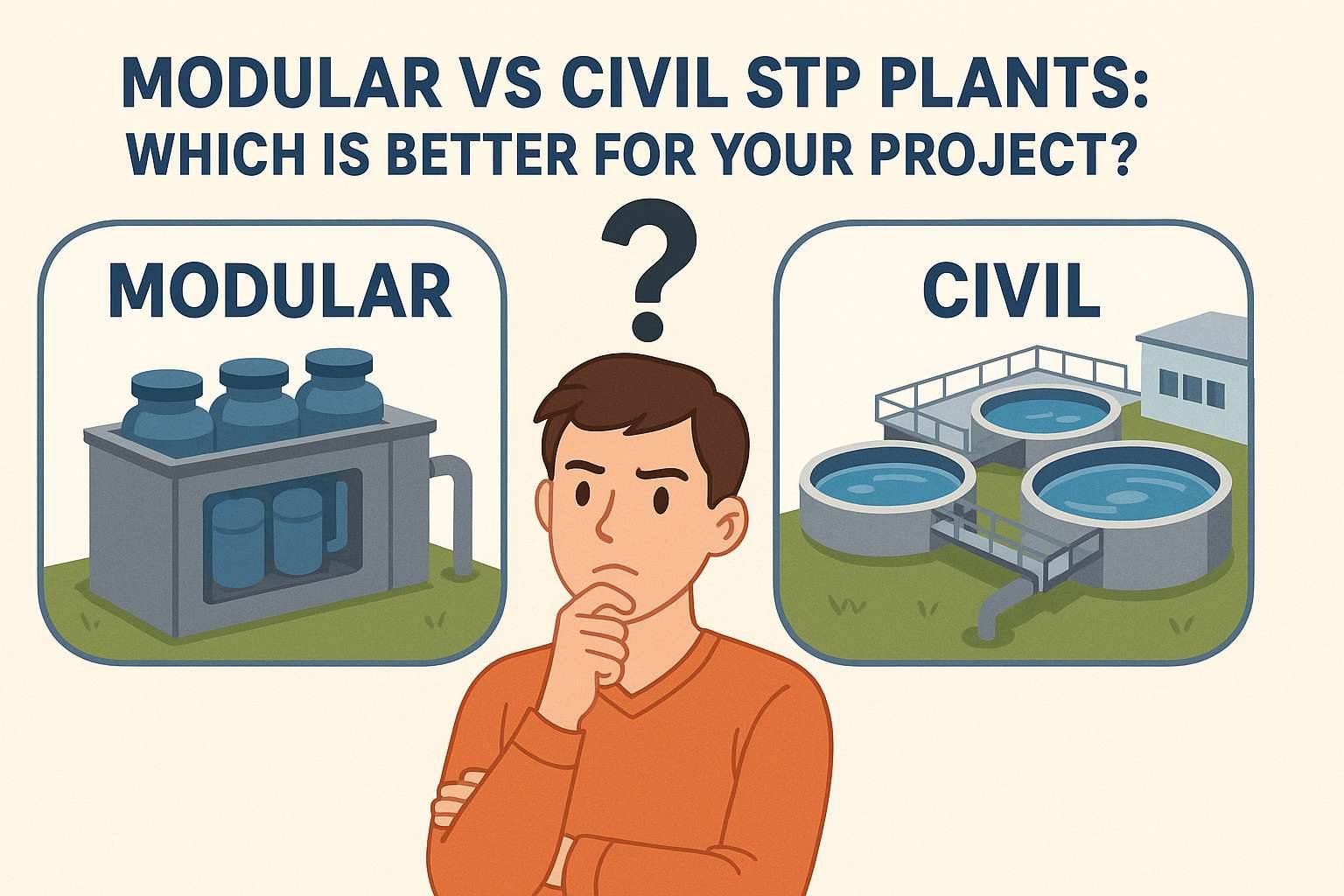
In today's fast-evolving industrial landscape, sustainable wastewater management is not just a regulatory requirement but a moral and operational necessity. From residential townships to industrial parks, the need for an efficient STP plant (Sewage Treatment Plant) has never been more crucial. However, when it comes to choosing between Modular STP vs Civil STP, decision-makers often find themselves at a crossroads.
This guide is designed to provide a thorough, intent-based comparison to help you decide which STP solution best aligns with your project's requirements — whether you’re a manufacturer, OEM supplier, infrastructure developer, or institution dealing with water purification and RO systems.
Understanding the Basics: What Are STP Plants?
An STP plant is a system that treats sewage and domestic wastewater to make it safe for reuse or discharge. It typically involves multiple processes such as screening, primary treatment, aeration, secondary treatment, and disinfection.
There are two primary types of STP systems:
-
Civil STP Plants: Built on-site using concrete structures, customized design, and civil engineering.
-
Modular STP Plants: Pre-engineered, factory-fabricated systems delivered in modular units and installed on-site with minimal civil work.
Let’s dive into a detailed comparison of Modular STP vs Civil STP across critical parameters.
1. Installation Time and Project Turnaround
Modular STP Plants
Modular STP units are pre-engineered and fabricated off-site. This allows for a plug-and-play setup, drastically reducing installation time. In many cases, installation can be completed within days or a few weeks, depending on capacity.
Civil STP Plants
Civil STPs involve extensive site preparation, civil construction, and custom design. The project timeline often spans several months, making it less suitable for projects with tight deadlines.
Verdict: If time is a critical factor, Modular STPs are the clear winner.
2. Space Requirements
Modular STP Plants
Modular systems are compact and optimized for space. They are ideal for locations with space constraints, such as urban commercial buildings, residential societies, or industrial plants with limited land.
Civil STP Plants
Civil STPs generally require larger land areas for tanks, pipelines, and treatment zones. While customizable, they are more suitable for large-scale projects with ample space.
Verdict: Modular STPs offer better space efficiency and footprint optimization.
3. Customization and Scalability
Modular STP Plants
Although modular units are configurable, they may have limitations in terms of design flexibility. However, scalability is straightforward — you can add more modules as demand increases.
Civil STP Plants
Civil plants offer unlimited design customization and can be tailored to meet specific inflow volumes, effluent standards, and site constraints. They are ideal for projects requiring unique design elements or specialized treatment processes.
Verdict: For high customization needs, Civil STPs have the edge. For scalable, repeatable installations, Modular STPs excel.
4. Maintenance and Operational Simplicity
Modular STP Plants
These systems are designed with ease of use in mind. Many modular STPs come with automated control panels, remote monitoring, and fewer moving parts, simplifying operation and maintenance.
Civil STP Plants
Civil systems may require more manpower and technical skill for regular operations, particularly if they involve complex treatment processes.
Verdict: Modular STPs offer easier operation and maintenance, especially beneficial for decentralized or unmanned setups.
5. Cost Implications
Modular STP Plants
While the upfront cost may seem higher per unit volume, Modular STPs reduce long-term project costs due to faster installation, less labor, minimal civil work, and lower maintenance.
Civil STP Plants
Civil STPs may have lower initial capital costs per MLD (Million Litres per Day) but involve higher labor costs, longer timelines, and potential delays that can inflate total project cost.
Verdict: Modular STPs are cost-effective for most small to medium-sized applications. Civil STPs may be more viable for very large-scale infrastructure projects.
6. Compliance and Standardization
Modular STP Plants
Most modular systems are designed to meet regulatory standards right out of the box. These plants undergo factory-level testing, ensuring consistent performance and adherence to CPCB (Central Pollution Control Board) norms.
Civil STP Plants
Meeting compliance depends heavily on the contractor’s execution, local sourcing, and on-site quality control. Inconsistent workmanship can sometimes lead to performance issues and non-compliance.
Verdict: Modular STPs offer better consistency and built-in regulatory compliance.
7. Portability and Future Flexibility
Modular STP Plants
One of the biggest advantages of modular systems is portability. These units can be relocated or resold with relative ease, making them ideal for lease-based or temporary installations.
Civil STP Plants
Built permanently into the ground, civil STPs are immovable and cannot be relocated without significant deconstruction and expense.
Verdict: Modular STPs provide unmatched portability and lifecycle flexibility.
8. Environmental Impact
Modular STP Plants
Less construction means reduced environmental disruption during setup. Some systems also use advanced technologies like MBR (Membrane Bio Reactor), MBBR (Moving Bed Biofilm Reactor), and SBR (Sequencing Batch Reactor) to improve treatment quality with lower ecological footprint.
Civil STP Plants
Civil construction can disrupt the surrounding ecology due to excavation, cement usage, and long-term site alterations. Environmental safeguards need careful integration.
Verdict: Modular STPs align better with green building standards and low-impact development.
9. Use Cases: Where Each Works Best
Whether you're setting up a small institutional facility or scaling operations for a township, choosing the right STP plant ensures compliance, cost-efficiency, and long-term operational reliability.
Modular STP Is Ideal For:
-
Small and mid-sized residential projects
-
Commercial buildings
-
Hospitals and educational institutions
-
Industrial units with moderate water use
-
Temporary setups like construction camps or mining sites
Civil STP Is Ideal For:
-
Large-scale residential townships
-
Industrial parks with high wastewater load
-
Municipal sewage treatment infrastructure
-
Custom-built water reuse or recycling systems
Conclusion: Choose based on the scale, permanence, and operational complexity of your project.
10. Technological Advancements
Modular STP Plants
Modern modular STPs integrate IoT, automation, and cloud-based monitoring. Remote diagnostics, alerts, and control improve reliability and reduce downtime.
Civil STP Plants
While they can incorporate technology, it’s often added manually and managed locally, requiring higher technical oversight.
Verdict: Modular STPs are ahead in tech integration and digital readiness.
Modular STP vs Civil STP: Final Comparison Table
| Parameter | Modular STP Plant | Civil STP Plant |
|---|---|---|
| Installation Time | Fast (days to weeks) | Slow (months) |
| Space Requirement | Compact | Requires large area |
| Customization | Limited, scalable modules | Highly customizable |
| Maintenance | Low, user-friendly | Higher, skilled labor required |
| Cost Efficiency | High for small to mid projects | High for very large projects |
| Compliance | Factory tested, standardized | Variable, site-dependent |
| Portability | Portable | Permanent |
| Environmental Impact | Low | Moderate to high |
| Ideal Use Case | Commercial, institutional | Large infrastructure projects |
| Tech Integration | High (IoT, automation) | Medium (manual integration) |
Which One Should You Choose?
The decision between Modular STP vs Civil STP boils down to your project’s scale, timeline, budget, and operational preferences.
-
If you're seeking a quick-to-install, space-efficient, and tech-enabled solution, go with a modular STP plant.
-
If your project requires custom design, large volume handling, and long-term permanence, a civil STP plant might be more suitable.
Whichever you choose, make sure it aligns with your project goals, regulatory requirements, and sustainability roadmap.
To explore industry-standard STP plant solutions and select the right model for your business needs.