

RO Water Wastage Problem and New Solutions in 2025
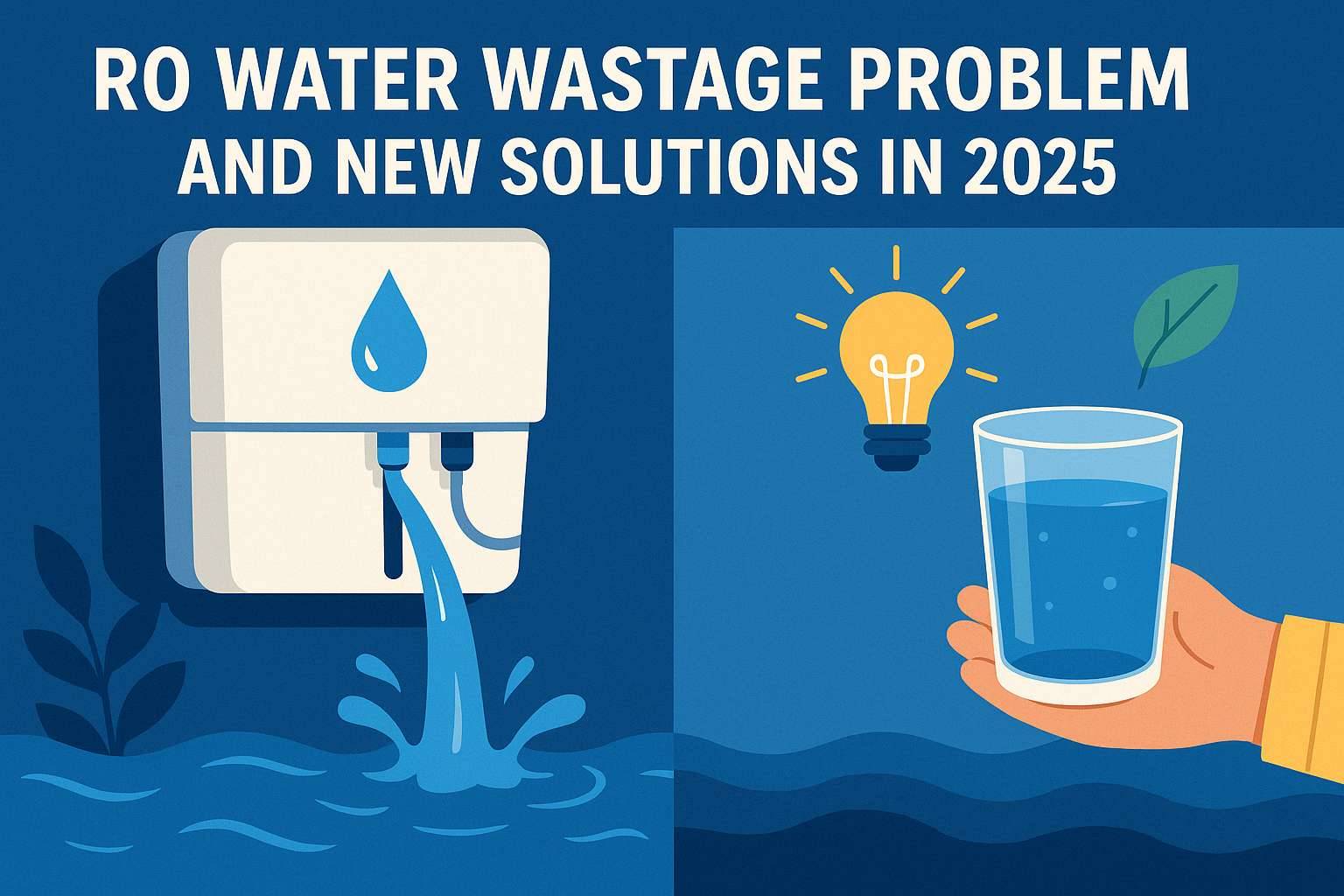
Reverse Osmosis (RO) purifiers have become a standard choice in households and industries for delivering clean, safe drinking water. However, they come with a long-standing concern—water wastage. Traditional RO systems often waste 2–3 liters of water for every liter they purify. In a country like India, where water scarcity is real in many regions, this becomes a pressing environmental and practical issue.
In 2025, the spotlight is back on sustainability, and the focus has shifted to finding innovative solutions for reducing RO water waste. This blog dives into the RO water wastage problem and explores the new solutions in 2025 that promote zero waste RO systems, efficient water-saving, and smart reusability.
Why Do RO Purifiers Waste Water?
To understand the issue better, we must start with the core function of an RO purifier. RO systems work by pushing water through a semipermeable membrane to remove dissolved salts, chemicals, heavy metals, and microorganisms. While this process is highly effective, it also separates a significant amount of water as “reject water” or waste water.
This reject water carries all the filtered-out contaminants and cannot be directly consumed. Typically, for every 1 liter of clean water, around 2–3 liters are rejected, depending on the water's TDS (Total Dissolved Solids) level and system efficiency.
The Scale of the Problem
Let’s break this down with an example. If a family consumes 15 liters of purified water a day, they may waste up to 30–45 liters daily, leading to more than 1,000 liters per month. When multiplied by millions of households using RO across the country, the environmental impact is staggering.
Moreover, borewell water, which is high in TDS and commonly used in Tier 2 and Tier 3 cities, makes RO systems work harder, leading to even higher wastage rates.
Top Concerns Arising from RO Water Wastage
-
Water Scarcity: Areas dependent on groundwater or tankers can’t afford to lose precious water.
-
High Water Bills: Especially in urban setups with metered water supply.
-
Environmental Impact: Wasted water contributes to the larger crisis of unsustainable water consumption.
-
Regulatory Pushback: Growing awareness is prompting governments and NGOs to discourage high-waste RO units.
Emerging in 2025: A Green Revolution in RO
Water conservation is no longer optional—it's urgent. Fortunately, 2025 has seen a significant shift in how we approach RO purification. Below are some game-changing solutions aimed at reducing or completely eliminating RO water wastage.
1. The Rise of Zero Waste RO Systems
The zero waste RO concept is trending in 2025. These systems come with internal mechanisms that recycle the reject water, either back into the system after treatment or for secondary uses.
Some methods used:
-
Dual membrane technology to minimize waste.
-
Internal storage tanks to collect reject water for reuse.
-
Re-processing units that treat reject water separately for non-potable use.
Benefits:
-
Reduces freshwater consumption.
-
Aligns with sustainability goals.
-
Saves on water bills.
2. Smart RO with Water Efficiency Tracking
New-age RO purifiers now come with smart features that track purification efficiency and waste in real time. Users are notified about:
-
TDS of input and output water.
-
Volume of rejected water.
-
Efficiency rate and maintenance needs.
These analytics help in fine-tuning consumption habits, detecting faults early, and improving overall performance with data-driven water-saving decisions.
3. Reusing RO Waste Water: Practical and Safe Applications
Reject water from RO purifiers is not suitable for drinking, but that doesn’t mean it should go down the drain. In 2025, people are finding innovative and practical ways to reuse RO waste water at home and in small industries.
Safe Ways to Reuse RO Waste Water
-
Toilets: Use it for flushing to save potable water.
-
Gardening: Only for plants that can tolerate higher TDS; avoid delicate or edible plants.
-
Mopping Floors: Great way to clean surfaces without needing fresh water.
-
Car Washing: Though slightly hard, it’s fine for vehicles.
-
Laundry (Pre-Wash): Ideal for initial rinse cycles.
Important Tip: Always test the TDS of reject water before using it on plants or laundry. High TDS can damage fabrics and harm soil.
4. Pre-Filtration and Multi-Stage Systems
A key trend in 2025 is combining RO with UV/UF or sediment filters that treat water before it hits the RO membrane. This reduces the load on the RO membrane and minimizes water rejection.
For example:
-
Sediment filters remove physical impurities, protecting the RO membrane.
-
Activated carbon removes chlorine and organic matter.
-
UF (Ultra Filtration) handles low TDS water without waste.
Such multi-stage systems reduce the need for over-processing and ensure only necessary water passes through RO, thereby reducing wastage.
5. Community RO Models with Efficient Distribution
In several regions, especially rural and semi-urban areas, community-based RO units are being installed with centralized water saving mechanisms. These include:
-
Integrated wastewater tanks.
-
Pipe distribution of reject water for farming or construction.
-
High-efficiency, low-waste membranes optimized for local water conditions.
This shared-resource model ensures clean water access without excessive wastage.
6. Government Regulations and Guidelines (2025 Update)
In response to increasing awareness and environmental concerns, regulatory bodies are enforcing stricter norms on RO systems.
New mandates include:
-
Minimum water recovery rate standards.
-
Mandatory water reuse suggestions with every installed unit.
-
Discouragement of RO for low-TDS water (where RO is unnecessary).
This encourages manufacturers and users to prioritize water-saving technology and adopt alternatives where suitable.
7. Alternative Purification Methods
One big realization in 2025 is that RO isn't always necessary, especially for municipal water or low-TDS supplies. In such cases, UV and UF systems work efficiently with zero water waste.
This approach is being widely adopted in metros and cities where treated water is already supplied. The takeaway? Use RO only when absolutely required, and switch to more sustainable options when possible.
Also Read - Hot and Cold Water Purifiers
Final Thoughts: The Future of RO is Sustainable
Water conservation is no longer a trend—it’s a responsibility. In 2025, the conversation around RO water saving has moved from concern to actionable solutions.
With advancements in zero waste RO technology, smart monitoring, and wastewater reuse practices, users can continue enjoying the benefits of clean water without the guilt of wastage.
As we move forward, awareness and behavioral change will be just as crucial as technology. Whether you’re a homeowner, business, or water-conscious citizen, embracing these new solutions will not only reduce your footprint but also secure water for future generations.
Frequently Asked Questions (FAQs)
1. How much water does a regular RO system waste?
A typical RO system wastes 2–3 liters of water for every liter of purified water, depending on the TDS and membrane quality.
2. Can RO waste water be reused?
Yes, reject water can be reused for non-drinking purposes like mopping, flushing, car washing, and gardening (for salt-tolerant plants).
3. What is a zero waste RO system?
Zero waste RO systems either recycle the reject water back into the purification process or divert it for safe non-potable uses, reducing overall wastage.
4. Is RO necessary for all water types?
No, RO is required mainly for high-TDS water such as borewell or untreated supply. Municipal water can be safely purified using UV or UF systems.
5. How can I reduce RO water wastage at home?
Opt for a water-saving RO model, collect and reuse reject water, and regularly maintain the unit to keep its efficiency high.
Read next: What is the Minimum TDS for Drinking Water?