

TDS of drinking water in India
What is TDS in Water?
TDS stands for Total Dissolved Solids. It refers to the total concentration of dissolved substances in water. These can include inorganic salts such as calcium, magnesium, potassium, sodium, bicarbonates, chlorides, and sulfates, as well as some organic matter.
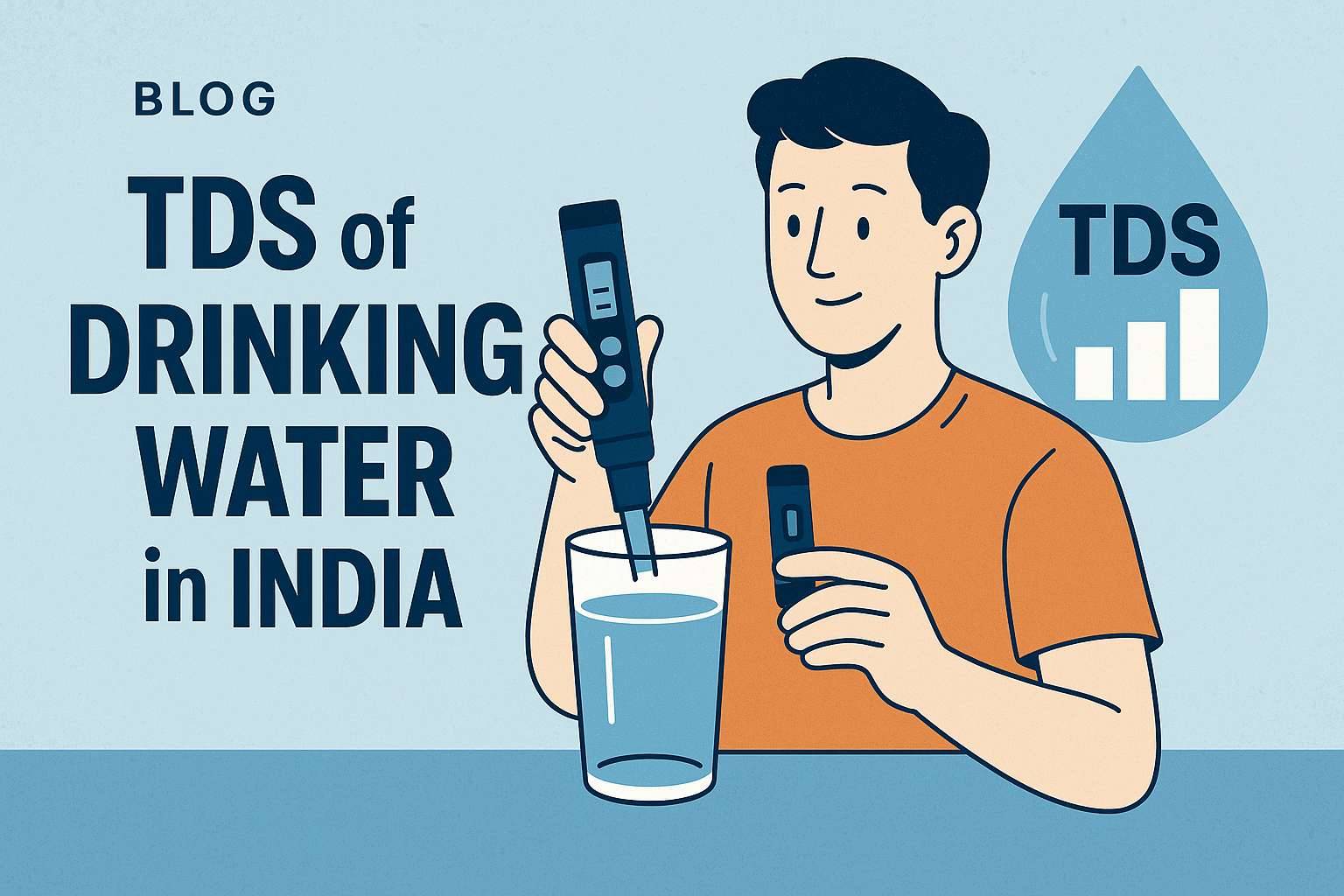
Measured in milligrams per litre (mg/L) or parts per million (ppm), TDS levels can help indicate the overall purity and taste of your drinking water. A TDS meter for water is often used to check this concentration quickly at home or in industrial settings.
Water from different sources like rivers, borewells, and municipal taps can vary widely in TDS levels depending on the natural and man-made elements it has passed through.
Why TDS Level is Important in Drinking Water?
The TDS level in water directly affects taste, health, and appliance longevity. Here’s why monitoring it is essential:
-
Health Implications: Very high or very low TDS can impact the body's electrolyte balance. For example, excess sodium or calcium in water can be harmful, especially for individuals with kidney issues or hypertension.
-
Taste and Palatability: Water with too high TDS may taste salty, bitter, or metallic. Low TDS water might taste flat or bland.
-
Water Purification Decisions: The acceptable TDS for drinking water helps determine whether you need a water purifier with a TDS controller, RO system, or basic filtration.
-
Appliance Efficiency: Hard water (with high TDS) can cause scaling in pipes, water heaters, and RO filters, affecting lifespan and efficiency.
As per the Bureau of Indian Standards (BIS), the desirable limit of TDS in drinking water is 500 mg/L, while the maximum permissible limit in the absence of an alternate source is 2,000 mg/L.
Effects of High TDS Levels in Drinking Water
When the TDS level in water goes beyond 500 ppm, it can cause several issues, depending on which substances are contributing to the total dissolved solids.
Health Risks:
-
Excess Sodium: Can elevate blood pressure and affect heart health.
-
Excess Fluoride: May cause dental and skeletal fluorosis.
-
Heavy Metals: In some industrial or polluted zones, arsenic, lead, or mercury could be present, all of which are toxic.
Taste and Texture:
-
Water may taste salty, metallic, or bitter.
-
Leaves an unpleasant mouthfeel or causes throat irritation.
Appliance Damage:
-
Scale buildup in kettles, geysers, and RO membranes.
-
Increased wear and tear on household water systems.
In high TDS regions, residents must often rely on an RO water purifier with TDS controller to bring the levels down while retaining essential minerals.
Effects of Low TDS Levels in Drinking Water
Low TDS water, typically below 100 ppm, is not always ideal either. While it seems "pure," it might lack essential minerals like calcium, magnesium, and potassium which play key roles in metabolic and neurological functions.
Possible Side Effects of Low TDS:
-
De-mineralized Water: Can leach minerals from the body, affecting bone health and electrolyte balance.
-
Flat Taste: Often described as bland or tasteless.
-
Corrosiveness: Extremely low TDS water may corrode plumbing and pipes over time.
Distilled water, often used in labs or medical applications, has a TDS close to 0, but it is not recommended for long-term drinking due to the absence of beneficial minerals.
Also Read - What is the Minimum TDS for Drinking Water? A Complete Guide
Drinking Water TDS Chart
The following chart can help you assess whether your drinking water TDS level is in a safe and palatable range:
| TDS Level (mg/L or ppm) | Rating | Comments |
|---|---|---|
| 0 – 50 | Unacceptable | Lacks essential minerals, flat taste |
| 51 – 150 | Excellent | Ideal for drinking with balanced minerals |
| 151 – 250 | Good | Acceptable and safe for regular consumption |
| 251 – 500 | Fair | Slight taste issues but still safe |
| 501 – 1000 | Poor | May cause scaling and taste problems |
| 1001 – 2000 | Very Poor | Not recommended unless treated |
| Above 2000 | Unsafe | Potential health hazards, must be purified |
The acceptable TDS for drinking water ideally falls between 150 and 300 ppm, providing both safety and palatability.
Cities in India with Safe Water TDS Levels
Different Indian cities have different TDS levels due to source water quality, local geology, and municipal treatment methods. Below are some key cities and their approximate average TDS levels:
| City | Source of Water | Avg. TDS (ppm) | Water Quality |
|---|---|---|---|
| Bengaluru | Cauvery River + borewells | 80–350 | Varies widely |
| Mumbai | Lakes (Tansa, Vaitarna) | 50–150 | Excellent |
|
Delhi NCR |
Yamuna, groundwater | 250–1200 | Varies; poor in some areas |
| Hyderabad | Krishna + groundwater | 400–800 | Moderate |
| Chennai | Groundwater + desalination | 300–800 | Fair |
| Kolkata | Hooghly River | 60–200 | Good |
| Ahmedabad | Sabarmati + borewells | 400–1000 | Moderate to poor |
| Pune | Dams + borewells | 150–450 | Acceptable |
Note: These values are average estimations and can vary from locality to locality within the same city. Always use a TDS meter for water to measure the exact TDS at your location.
How to Measure and Control TDS in Your Home Water
You can easily measure TDS levels using a TDS meter for water. These are affordable, digital devices that show instant ppm readings when dipped into a water sample. Once you determine the TDS, here’s how to handle it:
If TDS is Too High:
-
Install a Reverse Osmosis (RO) water purifier.
-
Preferably use a water purifier with TDS controller to retain beneficial minerals while filtering out harmful ones.
If TDS is Too Low:
-
Consider using mineral cartridges to enrich water with calcium and magnesium.
-
Avoid using double RO or distillation methods unless medically advised.
Also Read - Is 25 TDS Safe for Drinking Water?
Conclusion
Understanding the TDS of drinking water in India is more than just a technical detail—it's about safeguarding your health and ensuring a good quality of life. Whether you're sourcing water from a borewell, tanker, or municipal supply, it's essential to regularly test and adjust your water’s TDS using tools like a TDS meter and purification systems like RO with a TDS controller.
The right TDS level ensures not only safe hydration but also better taste and long-term well-being. In India, where water quality varies widely across regions, staying informed about your local TDS range can make a significant difference.
FAQs
Q1. What is the ideal TDS for drinking water in India?
A: The ideal TDS level is between 150–300 ppm, according to BIS recommendations for safety and taste.
Q2. Can I drink water with TDS over 500 ppm?
A: It’s generally safe up to 500 ppm, but anything above may require purification, especially if it contains harmful minerals or heavy metals.
Q3. How can I reduce the TDS in my water?
A: Use an RO water purifier with a TDS controller to bring the level down while keeping essential minerals.
Q4. Is low TDS water harmful?
A: Yes, water with TDS under 50 ppm may lack essential minerals and could be corrosive or tasteless.
Q5. Where can I buy a reliable TDS meter?
A: TDS meters are available online and at most water purification retail stores. Look for digital meters with calibration features for accuracy.