

Difference Between B2B and B2C - Everything You Need To Know
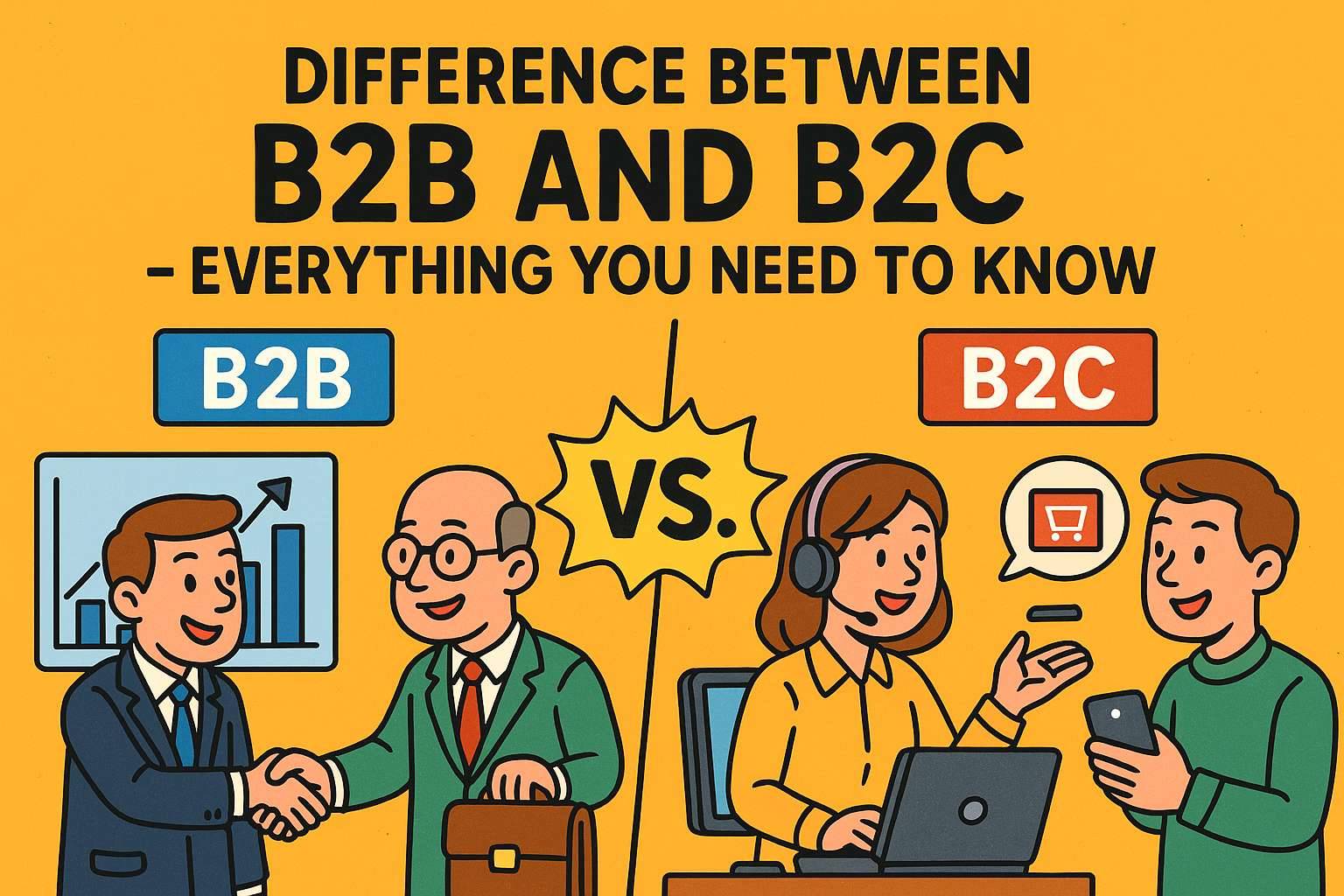
In the digital and commercial world, two core business models dominate how companies operate—B2B (Business-to-Business) and B2C (Business-to-Consumer). Whether you’re launching a new startup, enhancing your marketing strategy, or simply exploring e-commerce, understanding the difference between B2B and B2C is essential for targeting the right customers and choosing the correct strategies.
This guide explores everything you need to know about these models, with real-world examples like Romegamart, a B2B platform for the RO industry, and Amazon, a leading B2C platform.
Understanding the Basics: What is B2B and What is B2C?
Definition of B2B (Business to Business)
B2B refers to businesses that sell products or services to other businesses. These transactions are often larger in value and volume, with a focus on building long-term relationships. Examples include wholesalers, manufacturers, and suppliers.
Romegamart is a notable B2B platform in the RO (Reverse Osmosis) industry, connecting distributors and manufacturers for water treatment components.
Definition of B2C (Business to Consumer)
B2C involves selling directly to individual consumers. The transaction values are typically smaller, and the customer base is much broader. B2C includes everything from online retailers to restaurants and personal services.
Overview of business models in real-world industries
| Industry | B2B Model | B2C Model |
|---|---|---|
| Water Purification | Romegamart (RO wholesalers) | Livpure (Direct to buyers) |
| Fashion | Fabric suppliers to fashion brands | Myntra, Amazon |
| Electronics | Bulk chip supply to OEMs | Flipkart, Croma |
10 Key Difference Between B2B and B2C Marketing
When it comes to marketing strategies, the difference between B2B and B2C marketing becomes even more apparent:
| Aspect | B2B Marketing | B2C Marketing |
|---|---|---|
| 1. Target Audience | Businesses or decision-makers | General consumers |
| 2. Sales Cycle | Long, with negotiations and approvals | Short and spontaneous |
| 3. Buying Decision | Rational, logic-based | Emotional and instant |
| 4. Content Strategy | Whitepapers, case studies, webinars | Product descriptions, videos, reviews |
| 5. Channels Used | LinkedIn, Email Marketing, Trade Shows | Facebook, Instagram, Influencer Marketing |
| 6. Branding | Professional and expertise-driven | Fun, relatable, lifestyle-centric |
| 7. Relationship | Long-term partnerships | One-time or short-term interactions |
| 8. Pricing | Negotiated, tiered pricing | Fixed, transparent pricing |
| 9. Sales Volume | Low frequency, high-value | High frequency, low-value |
| 10. Support | Dedicated account managers | Customer service teams |
Difference Between B2B and B2C with Examples
B2B Example: Romegamart
Romegamart is a powerful B2B platform for the RO industry, where dealers and service providers can source components like:
-
RO membranes
-
SMPS units
-
Filter housings
It connects businesses rather than serving individual customers.
B2C Example: Amazon
Amazon sells everything from mobile phones to clothes directly to end-users. Their approach is B2C with a focus on convenience, fast delivery, and emotional appeal in ads.
Difference Between B2B and B2C in Tabular Form
| Feature | B2B | B2C |
|---|---|---|
| Target Audience | Businesses | Individual Consumers |
| Decision Makers | Multiple stakeholders | The individual buyer |
| Purchase Frequency | Low | High |
| Marketing Focus | Value, ROI | Emotions, Price, Reviews |
| Customer Relationships | Long-term | Short-term |
| Payment Terms | Credit, Invoices | Immediate payment |
| Communication Style | Formal, Technical | Informal, Friendly |
| Average Order Value | High | Low |
| Time to Convert | Weeks or months | Minutes to hours |
| Support Structure | Account management | Customer support |
Difference Between B2B and B2C E-Commerce
With the rapid digitization of commerce, both B2B and B2C e-commerce platforms have evolved significantly—but their operations, features, and expectations still differ immensely.
User Experience and Interface
-
B2C platforms (e.g., Amazon, Flipkart) prioritize aesthetics, speed, and mobile optimization.
-
B2B platforms like Romegamart focus on functional features such as:
-
Bulk ordering
-
Price negotiation tools
-
Buyer-seller messaging
-
Credit purchase integration
-
Payment Mechanisms
-
B2C: Simple gateways—Paytm, UPI, cards
-
B2B: Purchase orders (PO), credit lines, deferred billing, bank transfers
Inventory Visibility and Management
-
B2C: Stock shown per item with delivery timelines
-
B2B: Inventory dashboards, MOQ (Minimum Order Quantity), and restocking reminders
Examples
-
Romegamart allows RO dealers to browse filters and components from multiple sellers, apply for trade credit, and get order updates—all from a single dashboard.
-
B2C RO companies like Kent or Eureka Forbes let consumers buy filters or services directly.
Difference Between B2B and B2C in GST (Goods & Services Tax)
Tax compliance is another critical area where B2B and B2C businesses differ significantly.
GST Filing Requirements
| Aspect | B2B | B2C |
|---|---|---|
| Invoicing | Must mention GSTIN of the recipient business | Optional GST Invoice (if buyer unregistered) |
| Input Tax Credit | Can claim ITC on purchases | No ITC for end-consumers |
| Returns | GSTR-1, GSTR-2A, GSTR-3B mandatory | GSTR-1 & GSTR-3B |
| E-Invoicing | Mandatory for businesses above threshold turnover | Not required for B2C below ₹5 crore |
Practical Scenario
Let’s say a RO component wholesaler on Romegamart sells to a registered buyer:
-
Invoice will show buyer's GSTIN
-
The buyer claims ITC on the tax paid
-
Both parties upload the invoice to their GST returns
In contrast, a B2C customer buying a water filter cannot claim ITC, even if they receive a GST invoice.
Difference Between B2B and B2C in Hindi (हिंदी में अंतर)
B2B और B2C क्या होते हैं?
-
B2B (बिज़नेस टू बिज़नेस): एक व्यापार, दूसरे व्यापार को उत्पाद या सेवा बेचता है।
-
B2C (बिज़नेस टू कंज्यूमर): एक व्यापार सीधे ग्राहक को बेचता है।
मुख्य अंतर (Main Differences)
| बिंदु | B2B | B2C |
|---|---|---|
| ग्राहक | व्यापारी, कंपनी | आम उपभोक्ता |
| मूल्य निर्धारण | बातचीत पर आधारित | तय मूल्य |
| मार्केटिंग | पेशेवर और जानकारी-आधारित | भावना और ब्रांड केंद्रित |
| उदाहरण | Romegamart | Flipkart |
How to Choose Between B2B and B2C for Your Business
Selecting the right model determines your product positioning, growth speed, and revenue streams.
Self-Evaluation Checklist
| Question | If Yes, Consider |
|---|---|
| Are your buyers other businesses? | B2B |
| Are decisions made by procurement departments? | B2B |
| Are you solving everyday consumer problems? | B2C |
| Is your marketing budget aimed at awareness? | B2C |
| Do you offer volume discounts or trade credit? | B2B |
Industry-Specific Advice
-
RO and water treatment: If you sell to dealers, suppliers, or industrial buyers—B2B is your lane. Consider platforms like Romegamart.
-
Consumer-focused startups (D2C skincare, electronics): Begin with a B2C model, then consider B2B expansion later.
Hybrid Models: B2B2C and Other Variants
What is B2B2C?
Business-to-Business-to-Consumer (B2B2C) is a hybrid model that allows a business to reach end customers via another business.
Case Study Example
-
A RO membrane manufacturer lists products on Romegamart (B2B).
-
Romegamart allows dealers to create branded listings and sell to individual RO service providers or even end customers (C).
This enables manufacturers to maintain:
-
Bulk sales to dealers
-
Brand control on consumer-facing listings
Other Variants
-
D2C (Direct-to-Consumer): Example – a skincare brand selling only through its website
-
C2C (Consumer-to-Consumer): Platforms like OLX, Quikr, eBay
-
P2P (Peer-to-Peer): Mostly in fintech (like loan platforms)
Benefits of B2B2C
-
Higher reach
-
Greater brand visibility
-
Better control on pricing and distribution
FAQs About B2B and B2C Models
What is the major difference between B2B and B2C?
The major difference lies in the buyer type—B2B serves other businesses; B2C targets individual customers.
What is an example of B2B to B2C?
A water purification company supplying filters to a local dealer (B2B), who then sells it to households (B2C).
What is a C2C model?
Consumer-to-Consumer refers to individuals selling to other individuals, often via platforms like OLX or eBay.
What is the full form of D2C?
Direct-to-Consumer. It’s a model where manufacturers sell directly to end-users, skipping intermediaries.
What is the difference between B2B and B2C with examples?
-
B2B Example: Romegamart selling RO components to distributors.
-
B2C Example: Amazon selling purifiers directly to customers.
Conclusion: Picking the Right Business Strategy for the Right Market
Choosing between B2B and B2C models depends on your target customer, product type, and marketing capability. For the RO industry, platforms like Romegamart have simplified B2B transactions, while consumers benefit from B2C giants like Amazon.
The difference between B2B and B2C goes far beyond just who buys your product—it influences how you market, price, communicate, and scale your business.
Also Read -