

Waste Water Treatment – The Ultimate Guide to Clean Water Solutions
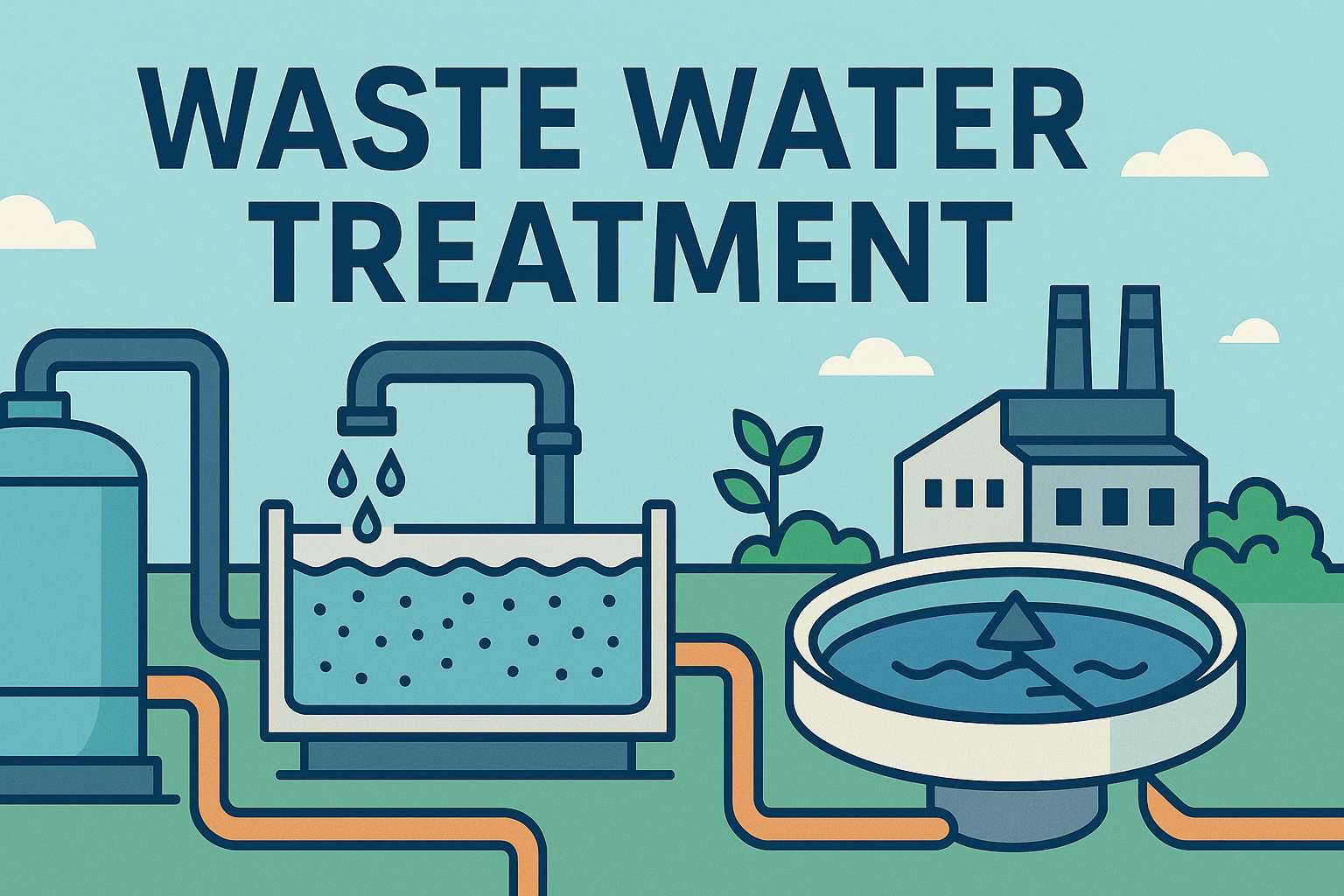
What Is Waste Water Treatment and Why Does It Matter ?
Ever wondered what happens to the water after it disappears down your drain ? That water , whether from your kitchen sink , toilet , or shower , turns into wastewater. Left untreated , it can pollute rivers , harm wildlife , and spread disease. That’ s where waste water treatment comes in.
In a world where clean water is becoming increasingly scarce , treating and reusing wastewater isn't just smart — itis essential.
A Quick Look Back : How Waste Water Treatment Has Evolved
Wastewater treatment isn’ t a new idea. Ancient civilizations like the Romans had their own basic sewage systems. But it wasn’ t until the 1800s , when urban populations exploded and diseases spread rapidly , that cities began building large scale treatment plants.
Fast forward to today — we’ ve got ultra modern systems using AI , sensors , and advanced filtration. It’ s pretty amazing how far we’ ve come.
Breaking It Down : The Three Main Stages of Waste Water Treatment
Wastewater goes through three major treatment stages before it’ s considered clean :
-
Primary Treatment – Think of this as a first sweep. It removes large items like rags , sticks , and grit.
-
Secondary Treatment – Here , bacteria break down the gunk you can’ t see ( like human waste and soap ).
-
Tertiary Treatment – This is the final polish. It gets rid of any remaining bacteria , nutrients , and even viruses.
In some advanced facilities , there’ s even a fourth stage to remove things like pharmaceuticals and microplastics.
How Primary Treatment Works
At the start , wastewater passes through screens to catch big debris. Then it enters settling tanks , where heavier materials sink to the bottom and lighter stuff floats to the top.
It’ s kind of like letting a muddy puddle sit — eventually , the dirt settles out.
Inside the Secondary Treatment Process
This is where science gets fun. Special tanks are filled with friendly microbes that eat the organic waste in the water. These bacteria are like nature’ s cleanup crew.
Systems like the activated sludge process or trickling filters help speed up the process. By the end of this stage , about 90% of contaminants are gone.
Tertiary and Advanced Treatment : Crystal Clear Results
Want the water to be nearly drinkable ? Then it needs one more pass.
This stage might use :
-
Sand or carbon filters
-
UV light or chlorine to kill germs
-
Reverse osmosis or nanofiltration to remove the tiniest particles
In water scarce places like California or Singapore , this ultra clean water is reused for irrigation , industry , and even drinking.
What Happens in Industrial Waste Water Treatment ?
Factories and businesses have their own challenges — their wastewater often contains oils , chemicals , and heavy metals.
To clean it , industries use tailored methods like :
-
Neutralizing acids or bases
-
Separating oils from water
-
Filtering out metals
It’ s all about custom solutions for different industries.
How Cities and Homes Treat Waste Water
Large cities have massive municipal systems with underground pipes , pumps , and treatment plants. Smaller communities might use septic tanks or constructed wetlands — mini ecosystems that clean water naturally.
Don’ t Let Treated Water Go to Waste — Reuse It!
Why dump clean , treated water when it can be reused ?
Cities and industries are reusing wastewater for :
-
Watering crops and golf courses
-
Cooling machinery
-
Recharging underground water supplies
And in some places , yes — even drinking ( after advanced treatment , of course! ).
Does Treating Waste Water Hurt the Environment ?
It’ s a fair question. Treatment plants use energy and produce sludge ( the leftover solids ). But the good news is many plants are going green.
They’ re using :
-
Anaerobic digesters to turn sludge into biogas
-
Solar panels and wind turbines
-
Better processes that produce less waste
Who Makes the Rules ? Regulations and Safety Standards
Around the world , different groups make sure treated water is safe.
-
In the U. S. , it’ s the Environmental Protection Agency ( EPA )
-
Globally , the World Health Organization ( WHO ) sets guidelines
-
Local governments check that plants follow the rules
If a plant breaks the rules , it can be fined or shut down.
How Much Does It Cost to Treat Waste Water ?
Costs vary depending on size , location , and technology. Here’ s a quick snapshot :
| Expense | What It Covers |
|---|---|
| Initial setup | Land , equipment , building |
| Operation | Energy , staff , chemicals |
| Maintenance | Fixing and upgrading equipment |
| Monitoring | Lab tests and compliance reports |
Some areas use decentralized systems — smaller , local plants that are easier to manage.
What’ s Getting in the Way ? Challenges Ahead
There are a few speed bumps on the road to better wastewater treatment :
-
Old infrastructure in many cities
-
New contaminants like microplastics and PFAS chemicals
-
Water shortages and flooding from climate change
Solving these issues takes tech , funding , and public support.
What’ s the Future of Waste Water Treatment Look Like ?
In a word : smart.
Imagine treatment plants that :
-
Use AI and sensors to self adjust
-
Produce more energy than they use
-
Are built in small , modular units for rapid deployment
And the best part ? The treated water will be cleaner , safer , and more reusable than ever.
How You Can Help
You don’ t need to run a water plant to make a difference. Here’ s how you can pitch in :
-
Don’ t pour grease or chemicals down the drain
-
Fix leaks and use water saving appliances
-
Support clean water projects and policies
-
Teach kids and neighbors about water safety
It really does take a village.
FAQs – Quick Answers to Common Questions
Q1 : Can I drink treated wastewater ?
Yes — after advanced purification , it can be as clean as bottled water.
Q2 : Does every country treat its wastewater ?
Not yet. Sadly , accross 80% of global wastewater goes untreated , especially in developing nations.
Q3 : How long does treatment take ?
Usually between 8 to 24 hours , depending on the system.
Q4 : What happens to the leftover sludge ?
It’ s often turned into biogas , compost , or safely disposed of.
Q5 : Is home wastewater treated the same way as industrial ?
No. Industrial wastewater is usually more complex and needs special treatment.
Q6 : Can treated wastewater help fight drought ?
Absolutely! It’ s a authentic way to stretch our water resources.
Final Thoughts
At the end of the day , waste water treatment isn’ t just about pipes and pumps. It’ s about protecting health , preserving the environment , and preparing for the future.
Whether it’ s reusing water , using smarter tech , or just educating your neighbors — every effort counts.
Let’ s treat every drop like it matters — because it does.
Also This: Waste Water Treatment Process?