

Water Purifier
Water Purifier: Complete Guide, TDS Levels, Business Opportunity & RO Parts Overview
Clean and safe drinking water has become one of the most essential needs for every household, office, commercial space, and industrial unit. With increasing water pollution and changing groundwater quality, the demand for high-quality Water Purifiers has grown rapidly. Whether it's a domestic RO system or a large industrial plant, water purification technology plays a critical role in ensuring health and safety.
This comprehensive guide covers everything related to water purifiers, purification technology, TDS levels, RO filter parts, maintenance essentials, and how you can start a profitable Water Purifier business. If you’re planning to work in the RO sector, this blog provides complete knowledge from basics to advanced.
What is a Water Purifier?
A water purifier is a multi-stage filtration device designed to remove physical, chemical, and microbiological impurities from water. It enhances taste, reduces harmful contaminants, and ensures safe consumption.
Modern water purifiers use various technologies such as:
-
RO (Reverse Osmosis)
-
UV (Ultraviolet)
-
UF (Ultrafiltration)
-
Activated Carbon filtration
-
TDS controllers and mineralizers
Among these, RO has become the most preferred technology due to its ability to remove dissolved impurities, heavy metals, and TDS.
Why RO Water Purifiers Are Popular
Reverse Osmosis technology removes almost 95–99% dissolved salts, microbes, and harmful contaminants. It is ideal for areas with high TDS.
RO purifiers are scalable and used in:
-
Homes
-
Offices
-
Schools and hospitals
-
Commercial kitchens
-
Industrial production units
-
Water filling stations
Their reliability and high purification efficiency make them the backbone of modern water treatment.
TDS in Water: What Should Be the Ideal Level?
TDS (Total Dissolved Solids) determines the mineral and salt content in water. Every water source has different TDS levels depending on soil, pipelines, salts, and contamination.
Ideal TDS Levels for Drinking Water (According to WHO & BIS)
| TDS Level (ppm) | Water Quality | Suitable for Drinking? |
|---|---|---|
| 0–50 | Very Low Mineral | Not Ideal |
| 50–150 | Excellent | Yes |
| 150–300 | Good | Yes |
| 300–500 | Acceptable | Yes |
| 500–900 | Hard Water | Not Ideal |
| 900+ | Unsafe | No |
Types of Water Purifiers
1. RO (Reverse Osmosis) Purifier
Removes dissolved salts, heavy metals, fluoride, arsenic, and microorganisms. Works best for borewell and hard water.
2. UV (Ultraviolet) Purifier
Destroys bacteria and viruses using UV radiation. Best for municipal supply water.
3. UF (Ultrafiltration) Purifier
Removes dirt, mud, sand, and microorganisms. Does not require electricity.
4. Activated Carbon Purifier
Improves taste and removes chlorine and organic chemicals.
5. RO + UV + UF + TDS Control
These multi-stage purifiers deliver premium purification and balanced mineral content.
RO Systems Parts: Complete Overview
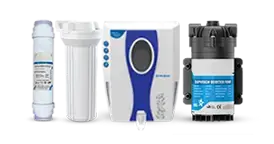
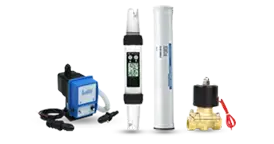
A quality water purifier depends on strong internal components. Let’s understand major RO Parts, RO Systems Parts, RO Filter Parts and their functions.
Key RO Components and Their Function
RO Membrane
Removes 99% dissolved impurities, heavy metals, and TDS.
Sediment Filter
Removes dirt, mud, rust, and sediments.
Activated Carbon Filter
Removes chlorine and organic impurities improving taste and smell.
Inline Filters
Add clarity, smoothness, and finishing to purified water.
Pre-Filter
Protects internal filters from damage and extends life.
Post Carbon Filter
Provides final polishing and enhances taste.
RO Booster Pump
Maintains pressure required for membrane performance.
UV Lamp
Kills bacteria and viruses that pass through RO membrane.
Mineral Cartridge
Adds essential minerals like calcium and magnesium.
FR (Flow Restrictor)
Maintains flow balance and prevents membrane damage.
Filter Housing & Connectors
Ensures leak-free purification and easy maintenance.
Signs That Your RO Parts Need Replacement
-
Water flow becomes slow
-
Water tastes bitter or salty
-
TDS levels increase suddenly
-
Storage tank smells or tastes odd
-
Membrane performance drops
-
UV lamp stops glowing
-
More wastewater is generated
Replacing RO parts on time helps maintain purification quality and increases purifier lifespan.
How Often Should You Replace RO Filter Parts?
| Component | Replacement Time |
|---|---|
| Sediment Filter | 6–12 months |
| Carbon Filter | 6–12 months |
| RO Membrane | 2–3 years |
| UV Lamp | 1 year |
| Inline Filters | 12 months |
| Pre-Filter | 3–6 months |
| Mineral Cartridge | 6–12 months |
Regular maintenance prevents damage and ensures safe drinking water.
How to Start a Water Purifier Business
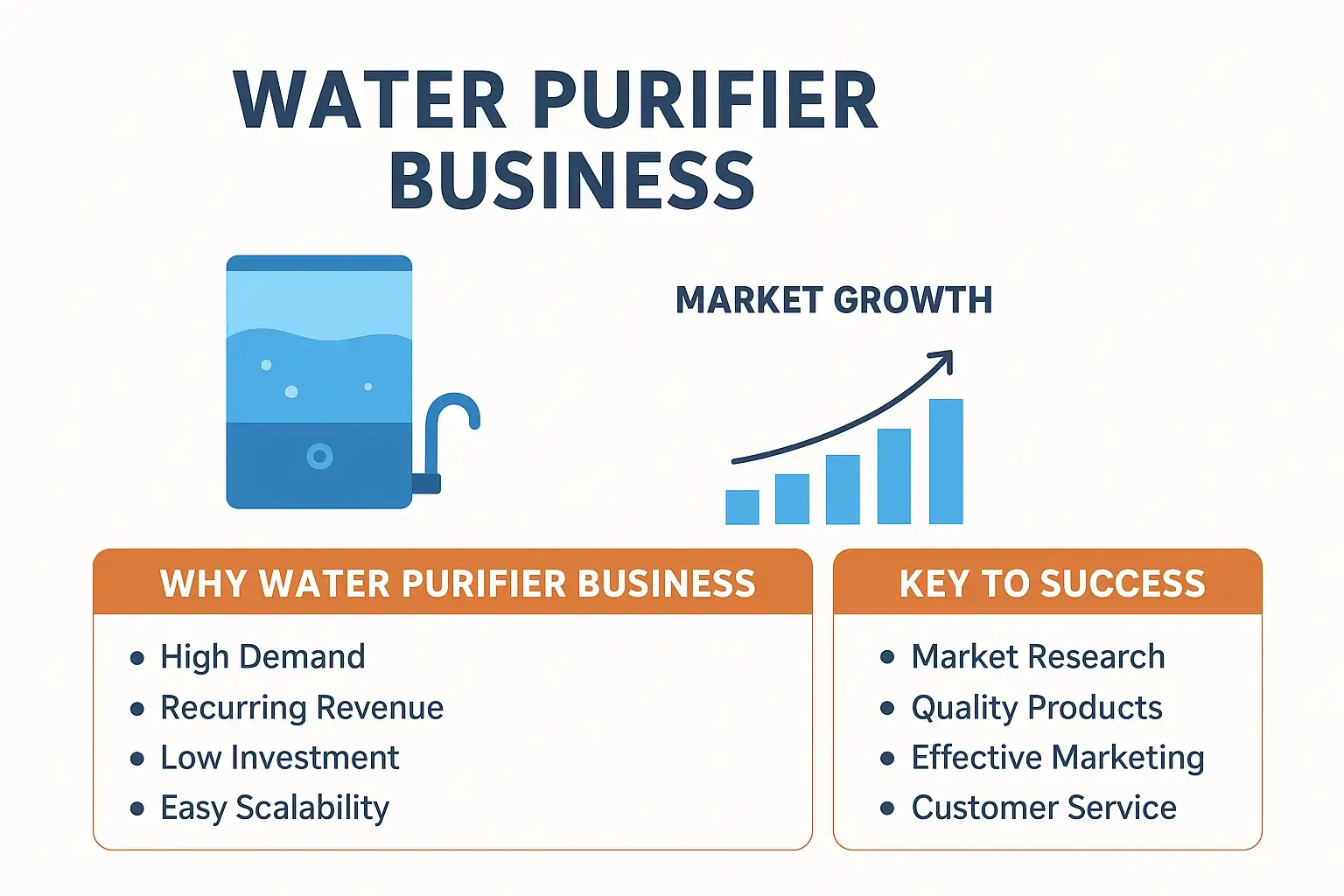
The water purifier business is growing rapidly due to high demand across India. Minimal investment and easy scalability make it one of the best business opportunities.
Why Water Purifier Business is Profitable
-
Demand in every household
-
Huge replacement and servicing market
-
RO plants needed in commercial sectors
-
Better margins on filters and RO parts
-
Recurring business through AMC & servicing
-
Easy to start and operate
Business Models You Can Start
-
RO Water Purifier Retail Shop
-
RO Spare Parts and Accessories Shop
-
Service & Repair Business
-
Domestic RO Assembly Business
-
Commercial RO Plant Installation
-
Industrial RO Systems Business
-
RO Parts Wholesale Supply
How to Start the Business Successfully
Step 1: Understand Market Demand
Check local water quality, TDS, and user requirements.
Step 2: Choose the Right Product Range
Include essential fast-moving items:
-
Sediment filters
-
Spun filters
-
Carbon filters
-
Inline filters
-
UV chambers
-
Filter housings
-
Water purifiers
Step 3: Partner With a Reliable B2B Supplier
If you want to buy wholesale RO systems, RO parts, and RO filter parts, Romegamart is the best B2B platform.
They offer:
-
1000+ RO products
-
All India delivery
-
Manufacturer-level pricing
-
Bulk order support
-
Domestic to industrial RO systems
-
Trusted brands
-
Replacement guarantee
Step 4: Set Up Your RO Shop
Stock domestic RO parts, commercial filters, and complete water purifier systems.
Step 5: Offer AMC & Services
Annual Maintenance Contracts bring recurring income.
Benefits of Using a Water Purifier
-
Removes harmful contaminants
-
Improves taste and odor
-
Reduces chlorine and chemicals
-
Safe for infants and elders
-
Saves cost vs bottled water
-
Protects against waterborne diseases
Frequently Asked Questions (FAQ)
1. What TDS level is ideal for drinking water?
TDS between 50–300 ppm is ideal. Anything above 500 is not suitable for direct consumption.
2. How often should RO filters be replaced?
Most filters need replacement every 6–12 months, and the RO membrane every 2–3 years.
3. Can RO purifiers work with borewell water?
Yes, RO is best for high-TDS borewell water.
4. Is RO water safe for daily use?
Yes, when the purifier has mineral balancing technology.
5. How to choose a Water Purifier for home?
Check your TDS, water source, filtration stages, brand reliability, and service availability.
Explore More
If you want to explore high-quality RO Parts, RO Filter Parts, Water Purifiers, or want to start a business, visit:
Romegamart – India’s Trusted B2B RO Spare Parts Marketplace