

Buy RO Water Purifier Filters Online – Wholesale Deals
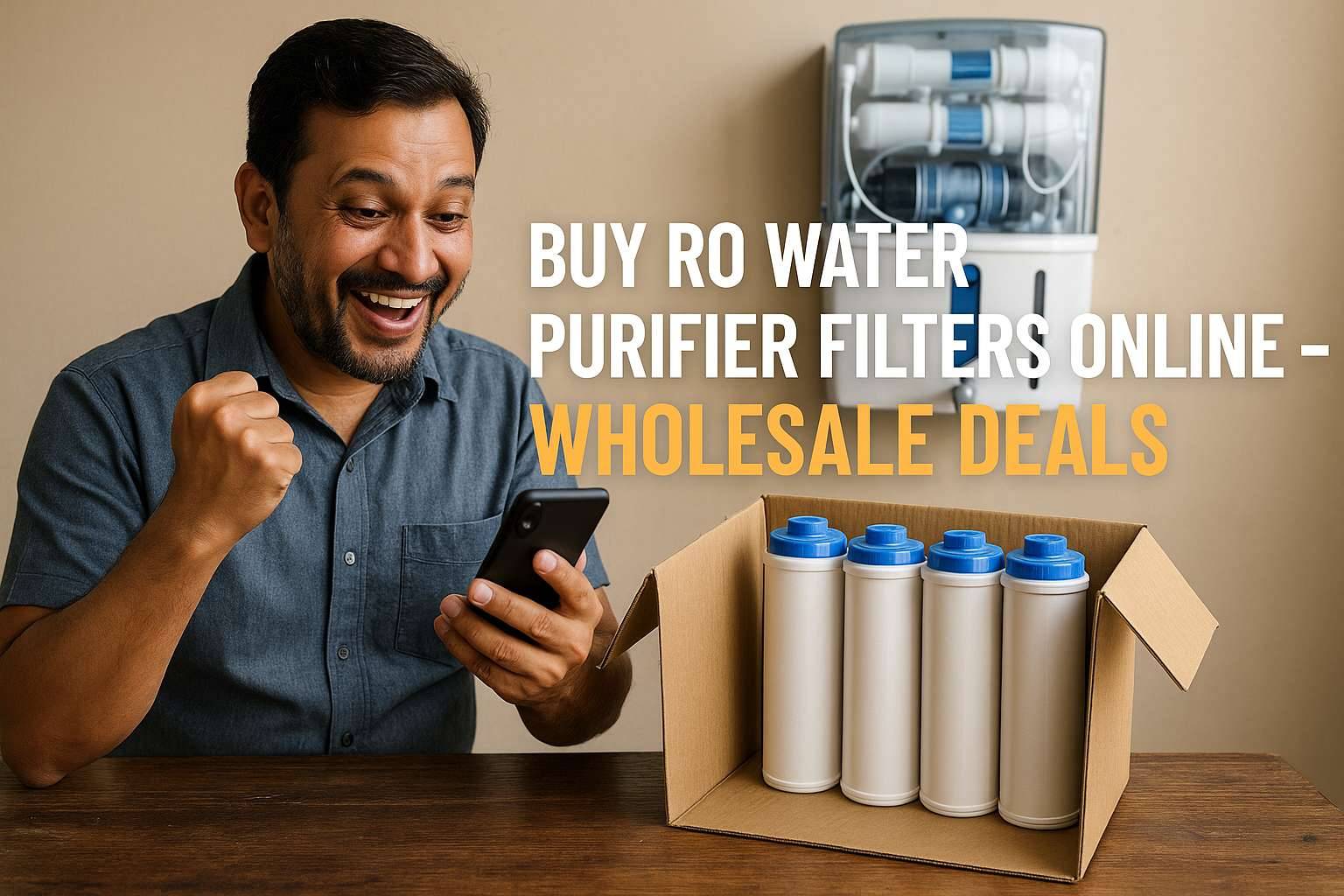
Every water purifier’s performance lives and dies by its filter. For dealers and wholesalers, that little component is the business — repeat sales, maintenance contracts, and customer trust all depend on it. If you’re asking where to buy water purifier filter kits in bulk, or hunting “water purifier filter price” and RO filters in bulk.
This guide walks you through the market, costs, sourcing strategies, and why buying online from a trusted B2B platform can transform your margins.
The quiet engine behind every purifier: why filters matter to your business
Walk into any small-town service shop and you’ll hear the same sentence from customers: “Beta, change the filter; the water tastes different.” That one request is the reason thousands of retailers and service technicians run sustainable businesses. Filters—sediment cartridges, activated carbon, RO membranes, post-carbon polishers, and UV lamps—aren’t merely spare parts. They are recurring revenue.
For a dealer, a cartridge sold today creates a service call, a revenue opportunity tomorrow, and the possibility of a new customer relationship. For wholesalers, moving RO filters in bulk to a network of service partners is a dependable cash flow model. For OEMs and installers, the right filter inventory reduces downtime and improves customer satisfaction.
So when you ask about water purifier filter price or where to source the best water purifier filter supplier, you’re really asking how to keep that revenue engine running efficiently.
What buyers actually need to know: types, performance, and demand
From a B2B perspective you should think in categories, not just single units. End customers may ask for a “new filter,” but your job is to match them with the right filter type for the application and water quality:
A narrative view of the filters you must stock:
-
Sediment filters: cheap, high-turnover items that protect downstream elements from sand and silt. Everyone with municipal or groundwater feed needs these replaced regularly.
-
Activated carbon filters (pre/post carbon): handle chlorine, organics, and taste — major demand in cities where municipal supply is chlorinated.
-
RO membranes (TFC/TFR): the high-ticket consumable. Replacement frequency depends on TDS, pre-treatment quality, and water consumption.
-
UF / UV modules: supplementary units for biological contamination control — in demand for hospitals, restaurants, and rural areas relying on contaminated sources.
-
Post-treatment cartridges: mineralizers and polishing filters that improve taste and differentiate premium offerings.
For wholesalers, this means a balanced stock profile: fast-moving sedim/carbon cartridges for volume sales, and a reliable inventory of RO membranes for higher margins.
How pricing works (what drives water purifier filter price)
There’s no single market price for “a filter.” Price depends on materials, brand, capacity, and whether the item is OEM or aftermarket. As a dealer or buyer, it’s useful to think in three bands:
-
Low-cost consumables (sediment, cheap carbon) — low per-unit price, high replacement rate. Margins depend on volume.
-
Mid-range filters (branded activated carbon, quality post-carbon) — slightly higher price, better margins, often sold as part of a service bundle.
-
Premium & critical components (RO membranes, UV lamps) — higher ticket items with replacement cycles measured in months/years; these drive service contracts.
A practical example: a common domestic sediment cartridge may retail at ₹150–₹400, while a branded RO membrane (for household units) can retail at ₹2,000–₹6,000 depending on make and capacity. In wholesale quantities, you can often secure 20–40% discounts, and for membranes, bulk buying directly from manufacturers can improve margins even more.
That’s why RO filters in bulk is not just a buying strategy — it’s a margin strategy.
Cost modelling for a wholesale buyer (realistic scenarios)
Imagine you run a small distribution network servicing 200 households and 20 commercial clients monthly. Your stock needs each month might look like:
-
300 sediment cartridges
-
200 pre-carbon cartridges
-
40 RO membranes (mix of household and small commercial)
-
20 UV lamp modules
If you buy sediment cartridges at ₹120 wholesale and sell at ₹220 to dealers, and membranes at ₹2,400 wholesale for a retail price of ₹3,500–₹4,500, your gross margin on membranes becomes meaningful. The key: negotiate scale pricing and predictable delivery.
For distribution businesses, carrying working capital for bulk inventory is often offset by higher per-order margins and fewer stockouts — both of which increase customer loyalty and recurring revenue.
Where to source filters: the landscape of supply
Historically, the answer was simple: travel to a wholesale market (for example, the RO spare parts wholesale market in Delhi) and buy. Bhagirath Palace and nearby lanes in Delhi were hubs for membranes, housings, and components. Dealers in the north built relationships there and shipped goods across states.
But the reality for many buyers is harsh: travel costs, variable quality, risk of counterfeit parts, and time lost in negotiation. For buyers in Tier-2/3 towns, the overhead of sourcing from Delhi can wipe out margins.
That’s why the wholesale market has moved online. Today, platforms that specialize in the water-purification niche provide verified suppliers, standardized listings, and logistics solutions — bringing the best of Delhi’s wholesale inventory to your doorstep. For B2B buyers the advantages are immediate: you get comparable wholesale prices without the travel, plus documentation and easier returns.
Why Romegamart changes the equation
Romegamart is not a generic marketplace — it’s a B2B platform built specifically for the water purification industry. For a DEALER, DISTRIBUTOR, or OEM buyer, that vertical focus matters:
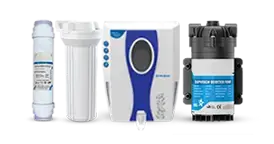
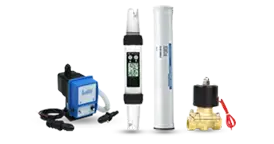
First, the catalog depth: Romegamart lists everything a professional buyer needs—sediment cartridges, branded and OEM RO membranes, UV lamps, housings, booster pumps, valves, and full RO filter kits. For a wholesale buyer searching “water purifier filter price” or “water purifier spare parts wholesale market in Delhi”, the platform aggregates competitive offers.
Second, verification: suppliers on Romegamart are vetted for business credentials, product authenticity, and delivery capability. For buyers who previously risked purchasing counterfeit membranes or inconsistent parts, that verification reduces operational risk.
Third, operational features: bulk-order workflows, quotation tools, lead generation, and logistics support are designed to help a wholesaler scale business without the manual friction of older procurement models.
Finally, value beyond procurement: the platform helps sellers with SEO and lead generation, meaning as a dealer you can also list repair services or small-volume packs and capture local demand.
Put simply, Romegamart brings the strengths of wholesale market for water purifier components to every city in India — digitally, reliably, and at scale.
How to build a resilient filter inventory strategy
A few practical rules of thumb for wholesalers and dealers:
-
Classify SKUs by velocity — segregate fast movers (sediment, carbon) from slow movers (specialist membranes) and manage reorder points accordingly.
-
Negotiate tiered pricing — commit to quarterly or yearly volumes with suppliers for better discounts.
-
Quality over cheapest price — poor membranes increase service calls and hurt reputation faster than a slightly smaller margin.
-
Stock critical spares — housings, O-rings, and pumps are small cost items but can halt service if unavailable.
-
Offer bundled services — sell filter kits with installation and AMC (annual maintenance contracts) to lock recurring cash flows.
These operational choices determine whether your business earns repeat revenue or loses customers to service outages.
Trends in demand and where to focus your buying
A few demand signals to watch in India’s market:
-
Urbanization & institutional demand — hospitals, schools, hotels increasingly require certified filtration and periodic replacements.
-
Packaging & bottled water — commercial bottlers demand high-quality membranes in larger capacities.
-
Water quality variability — regions with high TDS see higher membrane replacement cycles; rural areas have more demand for UV/UF components.
-
Service economics — customers prefer one-stop vendors who can both supply filters and provide timely installation/AMC services.
For wholesalers, this means mixing SKUs: domestic cartridges for volume, membranes for higher ticket value, and a few industrial membranes for contract sales.
Pricing tactics and negotiation tips
If you’re buying filters in bulk, here’s how to improve margins:
-
Bundle purchases: buy membranes and housings from the same supplier for package discounts.
-
Seasonal stock: prebuy before summer when demand spikes for bottled and chilled water.
-
Longer payment terms: ask for 30–60 day credit for larger volumes to reduce working capital pressure.
-
Quality verification: request sample testing certificates or a small initial lot to test before scaling.
-
Logistics consolidation: combine shipments for cross-state orders to lower freight costs.
Don’t forget to capture a digital record of all invoices and warranties — that helps with aftermarket support and builds trust with your customers.
How to sell filters smarter: product + service model
Selling filters is different from selling appliances. Customers buy filters repeatedly. That’s why the most successful dealers bundle products with services: scheduled replacements, doorstep filter change subscriptions, and AMC contracts. These recurring relationships reduce customer acquisition costs and stabilize cash flow.
Implement simple digital tools: SMS reminders for filter replacement, online payment for AMC renewals, and a basic CRM that tracks replacement dates. Romegamart’s buyer tools and lead management features can help suppliers and dealers manage this lifecycle more professionally.
Case example: A small distributor’s growth path
A distributor in a Tier-2 town began by servicing 150 households with sediment and carbon cartridges sourced locally. After listing on a B2B platform and buying membranes in bulk at a negotiated price, he began offering 6-month AMC plans. Within 12 months his monthly revenue doubled — the key drivers were reliable supply, competitive pricing, and the convenience of delivering and installing replacement kits.
This replicable model shows how inventory strategy + verified sourcing + service bundle = scalable business.
FAQs
Q1. What is an RO filter kit?
An RO filter kit is a packaged set of filters required to maintain or refurbish an RO purifier. Typically the kit includes a sediment cartridge, one or more carbon pre-filters, an RO membrane (depending on the model), and a post-carbon polishing cartridge. For commercial systems the kit may also include pre-treatment media and UV/UF assemblies.
Q2. How does an RO filter kit work?
An RO filter kit works in stages. Incoming water first passes through sediment filters (which remove large particles), then carbon filters (which remove chlorine and organics), followed by the RO membrane (which removes dissolved salts, heavy metals, and many contaminants). Finally, post-carbon or mineralizers polish the taste. In some systems, UV or UF stages provide biological disinfection.
Q3. What contaminants does an RO filter remove?
RO membranes remove dissolved solids (TDS), heavy metals (lead, arsenic), nitrates, fluoride (to varying degrees), and many chemical contaminants. Pre- and post-filters handle particulates, chlorine, and organics, while UV addresses biological contaminants like bacteria and viruses.
Q4. What are the components of an RO filter kit?
Common components include sediment cartridge, pre-carbon cartridge, RO membrane, post-carbon cartridge, O-rings, and sometimes UV lamp or UF module. For commercial kits, additional items can include anti-scalant chemicals and industrial-grade membranes.
Q5. What are the benefits of using an RO filter kit?
A full RO filter kit restores system performance, improves water taste, prolongs membrane life (when pre-treatment is correct), and reduces the risk of system failure. For businesses, kits standardize replacements, simplify stocking, and improve customer satisfaction.
Final thoughts: how to buy right and scale faster
If you’re serious about the water purifier filter business, treat procurement as a strategic function. Leverage specialized online B2B marketplaces that focus on water purification, buy smart with negotiated bulk contracts, and build recurring revenue through service bundles.
Romegamart provides a secure, industry-specific ecosystem designed to match buyers with verified suppliers, list competitive water purifier filter price comparisons, and facilitate bulk ordering without the uncertainty of traditional offline markets. For dealers, distributors, and OEMs, using an online B2B partner is no longer optional — it’s the practical route to scaling margins, reducing risk, and winning repeat business.