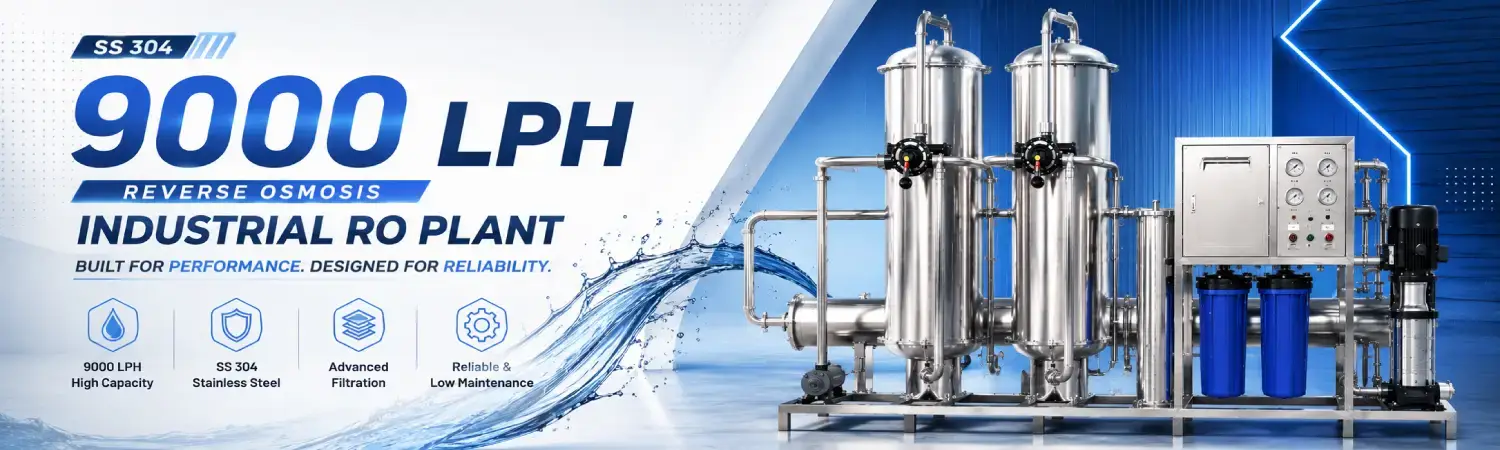
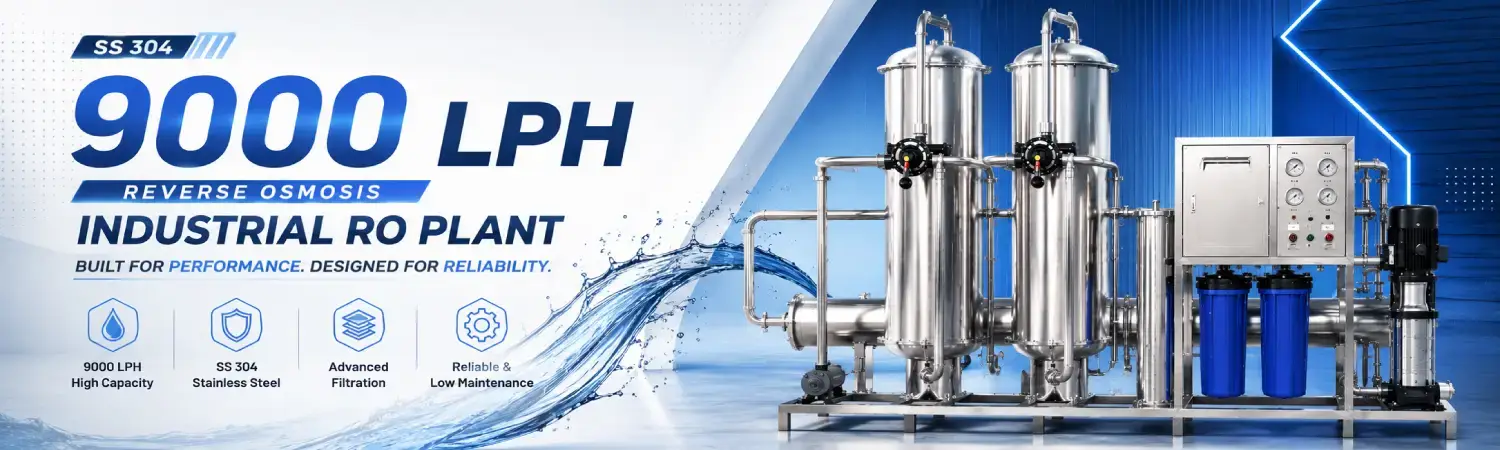
9000 LPH SS RO in Delhi


9000 LPH SS RO Plant: Features, Uses, Price & Complete Buying Guide
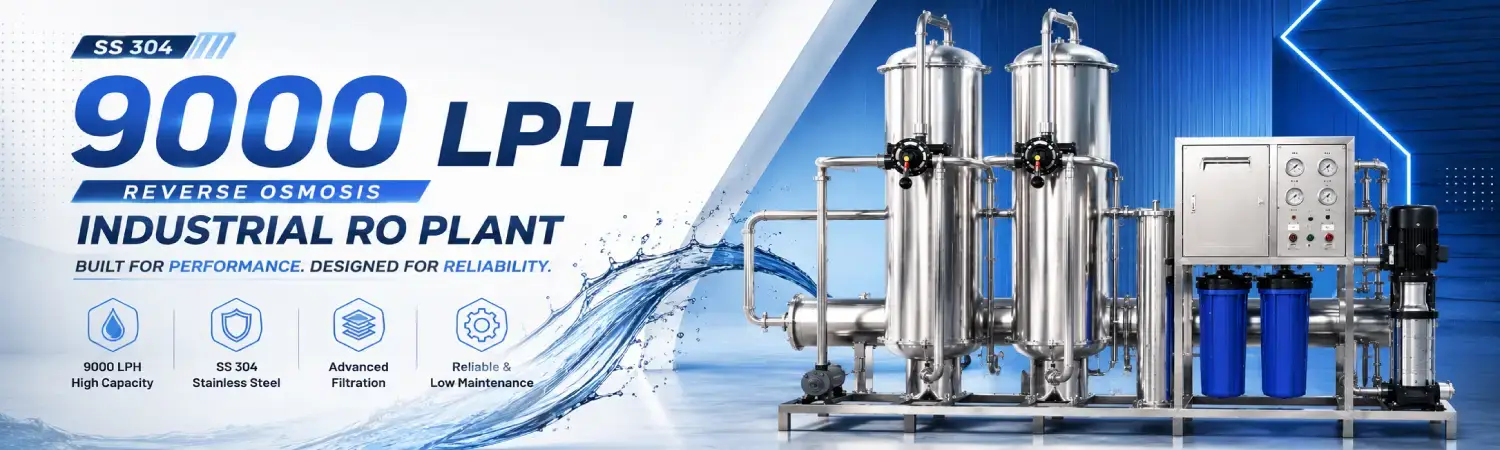
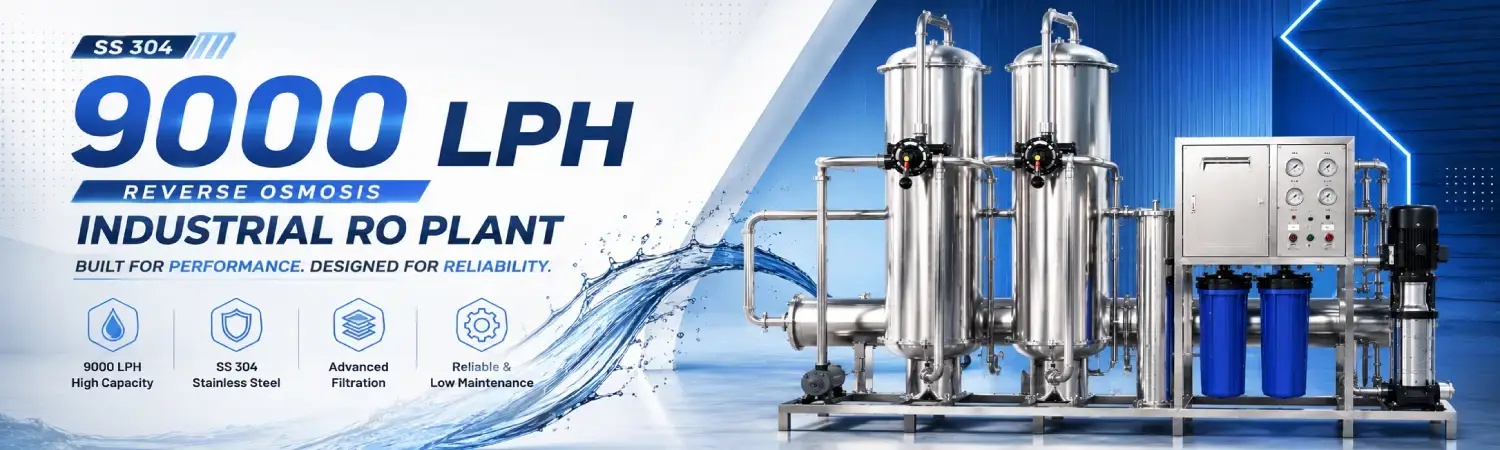
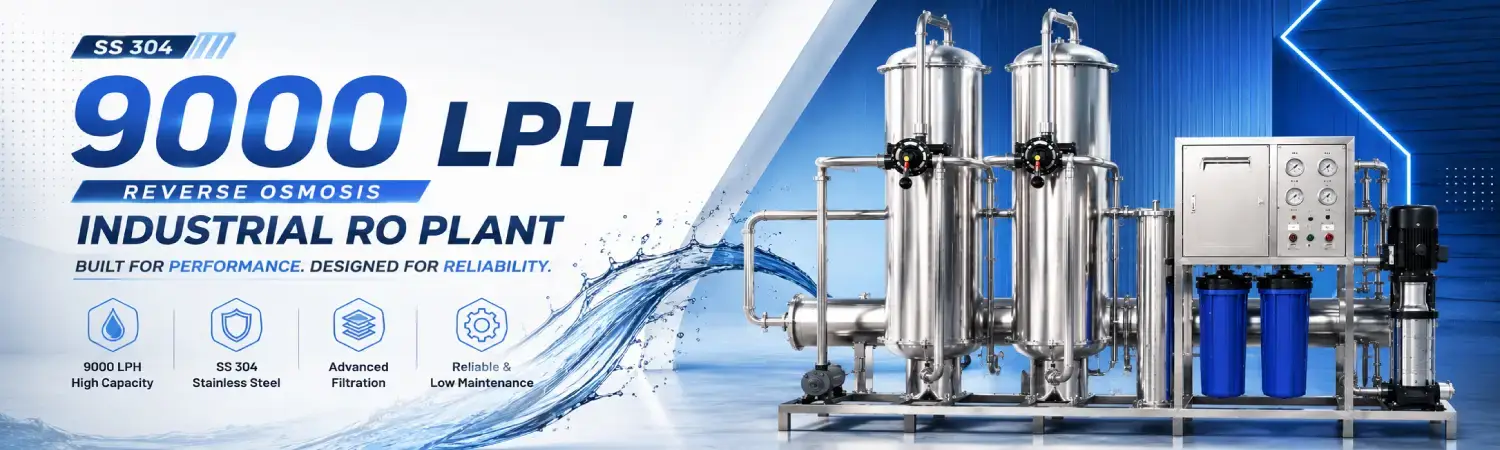
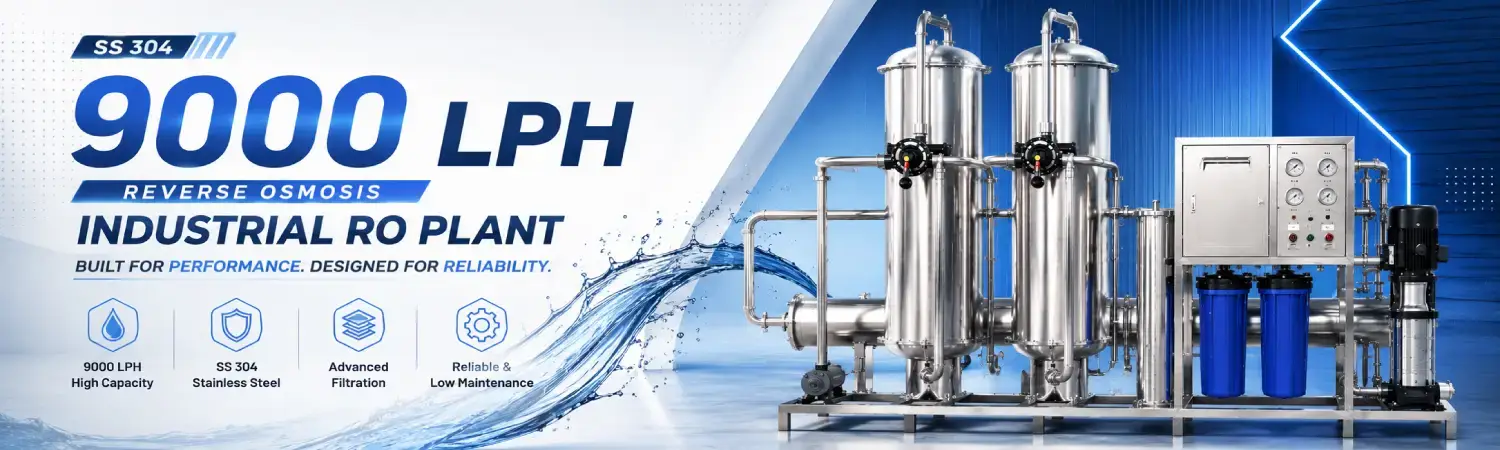
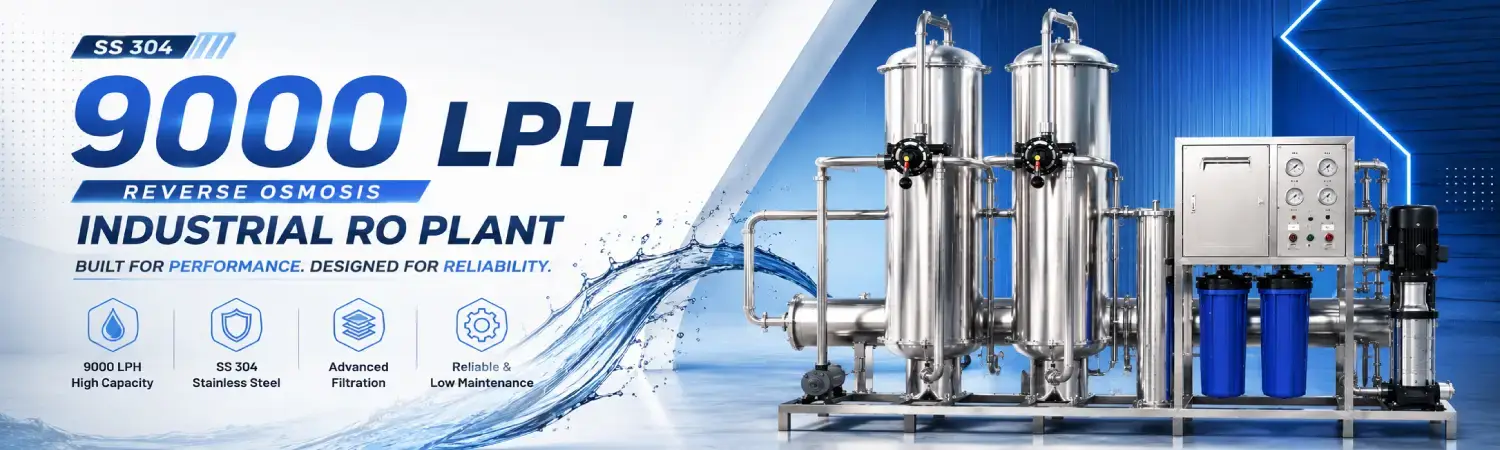
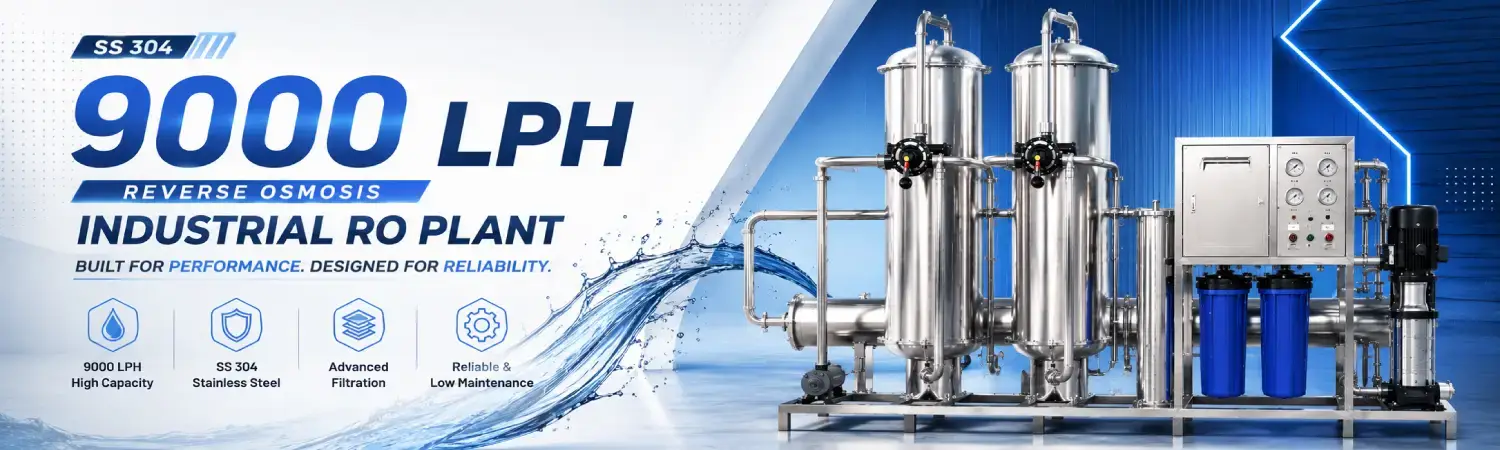
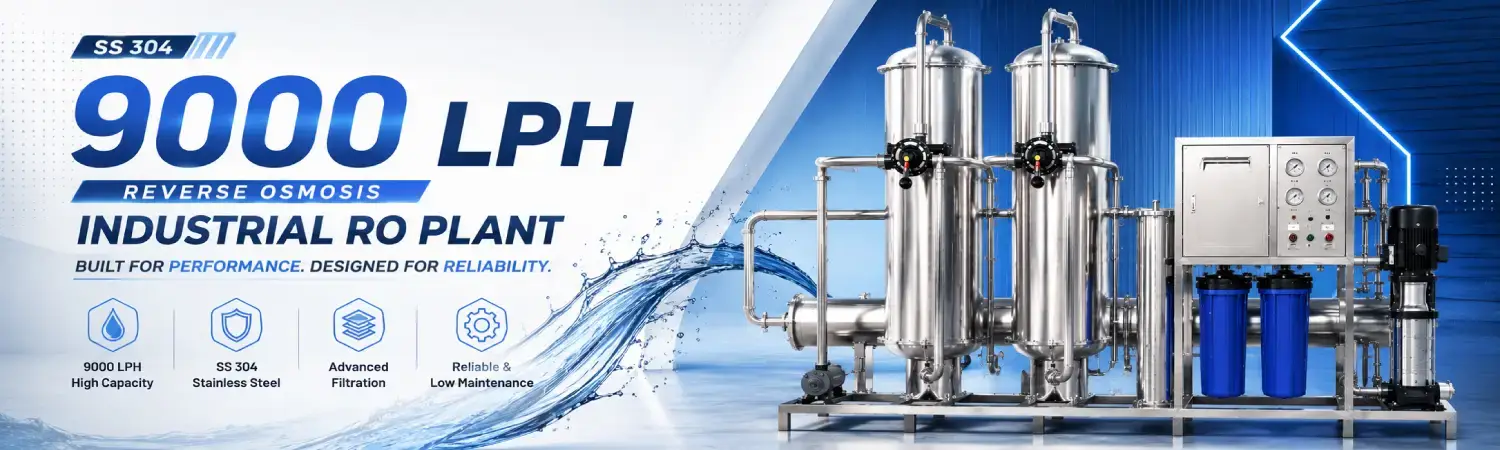
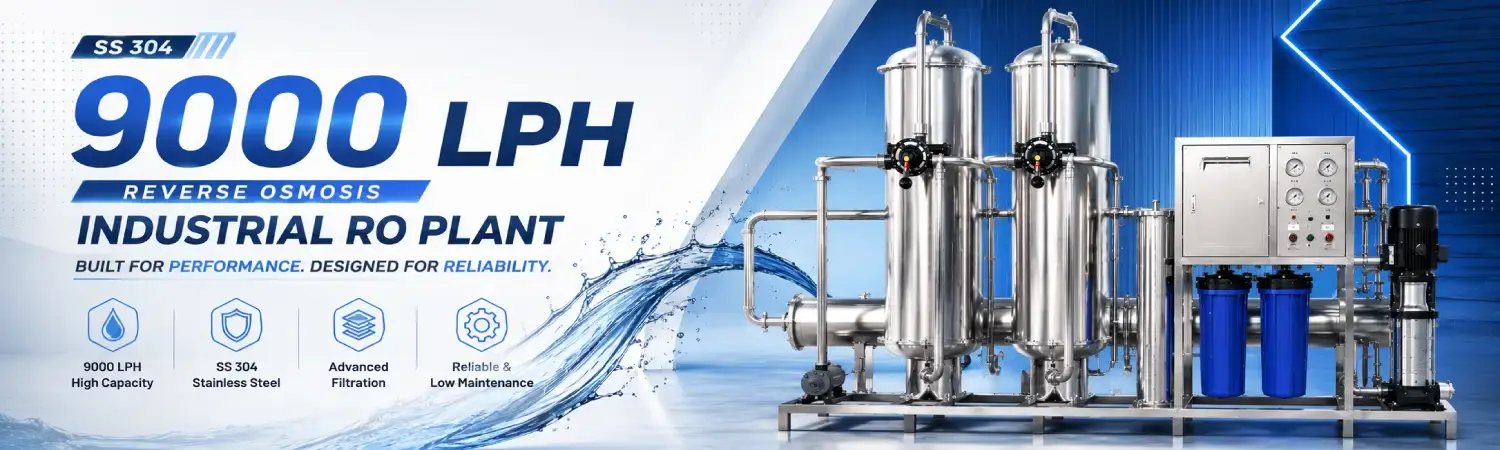
A 9000 LPH SS RO plant (9000 liters per hour stainless steel reverse osmosis plant) is designed for industries and commercial facilities that require high-volume purified water every day. Whether it’s for manufacturing, food processing, commercial bottling, hotels, or large campuses, this plant capacity delivers consistent and reliable performance.
As water quality concerns grow and industries seek sustainable solutions, the demand for a durable and efficient 9000 LPH RO plant continues to increase. This guide explains everything you need to know—from how the system works to the 9000 LPH RO plant price, the factors affecting cost, and how it compares to other capacities like the commonly searched 5000 liter RO plant price.
What Is a 9000 LPH SS RO Plant?
A 9000 LPH SS RO plant is a commercial-grade water purification system built to supply 9,000 liters of purified water per hour. It uses advanced reverse osmosis membranes to remove dissolved salts, excess minerals, heavy metals, microbes, and chemical impurities. The SS (stainless steel) body makes the system more hygienic, corrosion-resistant, and long-lasting compared to mild steel alternatives.
This capacity is suitable for medium to large industries that rely on continuous purified water output without interruptions.
Why Industries Choose a 9000 LPH RO Plant
Industries choose this plant because it strikes the perfect balance between capacity and cost-efficiency. While a 5000 LPH system may fall short for bigger requirements, and a 10000 LPH system may exceed budget limits, a 9000 LPH RO plant delivers strong output at an optimized investment.
Stainless steel construction ensures long-term reliability, making it ideal for industrial environments where durability and hygiene are essential. The plant maintains consistent performance even with fluctuating raw water quality.
How the 9000 LPH RO Plant Works
The working process begins with pre-treatment to remove sediments and suspended particles. Next, high-pressure pumps push water into RO membranes, where dissolved contaminants are separated. The post-treatment phase ensures water purity is suitable for industrial and commercial standards.
The entire process is automated or semi-automated depending on the chosen configuration. With high-quality membranes and pumps, the system ensures dependable and steady output.
Where a 9000 LPH SS RO Plant Is Commonly Used
This capacity is ideal for industries that require continuous water supply to maintain production. Food and beverage units depend on it for ingredient preparation, while textile and chemical industries use it to maintain process stability. Hotels, resorts, and hospitals also rely on large RO plants to deliver safe, purified water daily.
In commercial packaged drinking water operations, the 9000 LPH RO plant is widely used as the main purification system for 20-liter jars and bottle production.
Understanding the 9000 LPH RO Plant Price
The 9000 LPH RO plant price depends on the system’s configuration, automation level, water input quality, and the quality of materials used. Stainless steel plants are priced higher than mild steel due to their durability and sanitary design. Price also varies by the RO membrane brand, pump capacity, control panel quality, and additional filtration stages.
Plants designed for high-TDS borewell water require stronger pre-treatment, which affects cost. Those designed for municipal or surface water often have fewer filtration stages.
RO Plant 9000 LPH Price: What Influences It?
The RO plant 9000 LPH price may differ significantly based on whether the system is semi-automatic, fully automatic, or PLC-controlled. Fully automatic systems include advanced flow monitoring, digital control panels, and automated flushing, which cost more but reduce manpower needs.
Component brands also influence pricing. Premium pumps, imported membranes, and SS 304 or SS 316 frames increase cost but extend system life.
Some businesses compare this price with the 5000 liter RO plant price before choosing the ideal capacity. While a 5000 LPH plant may be more affordable, it cannot meet the needs of larger industries, making the 9000 LPH option more practical for long-term requirements.
RO Water Plant 9000 LPH Price Variation Across Manufacturers
The RO water plant 9000 LPH price varies between manufacturers due to differences in build quality, system design, and service support. Leading manufacturers usually offer stronger SS structures, better membrane brands, and reliable after-sales services, which increase overall value.
Local or low-budget systems may come at a cheaper price but often compromise on membrane quality, pump life, and long-term performance.
Why Stainless Steel Is the Better Choice
Stainless steel is preferred in industrial RO systems because it is hygienic, corrosion-resistant, and long-lasting. For industries requiring sterile environments—such as beverage units, pharmaceuticals, and hospitals—SS is essential. Even for general industrial use, SS ensures a higher return on investment due to its long service life and reduced maintenance needs.
Is a 9000 LPH RO Plant Worth the Investment?
Absolutely. For industries that rely on stable water quality and high volume, investing in a 9000 LPH RO plant reduces operational risks and ensures consistency. It minimizes dependency on external water sources, supports production efficiency, and lowers long-term water procurement costs.
In comparison to systems with lower capacity, such as the 5000 LPH, the 9000 LPH plant offers better scalability and long-term economic benefits.
Frequently Asked Questions (FAQ)
1. What is a 9000 LPH RO plant?
It is a high-capacity reverse osmosis water purification system that produces 9,000 liters of purified water per hour, ideal for medium and large industrial operations.
2. What is the 9000 LPH RO plant price?
The 9000 LPH RO plant price depends on raw water quality, system design, membrane brand, and the choice between SS or MS construction.
3. What affects the RO plant 9000 LPH price?
Factors include the TDS level of raw water, pre-treatment needs, pump quality, membrane type, and automation features.
4. What is the RO water plant 9000 LPH price range?
The RO water plant 9000 LPH price varies among manufacturers based on build quality, control panel type, and component brands.
5. How does it compare to the 5000 liter RO plant price?
A 5000 LPH plant is cheaper but suitable for smaller operations. The 9000 LPH RO plant is a better choice for industries that need high-volume daily water output.
Explore more - 9000 LPH SS RO, 10000 LPH SS RO, 50 LPH RO, 250 LPH SS.
More category - Water ATM, Water Softener, Water Treatment, Bottling Plant.