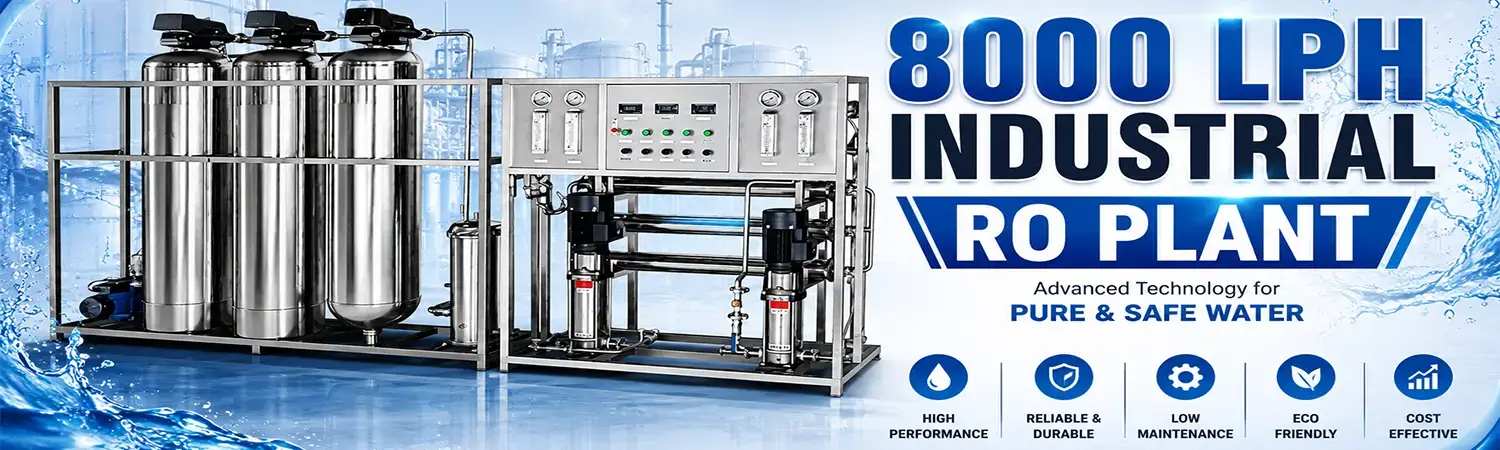
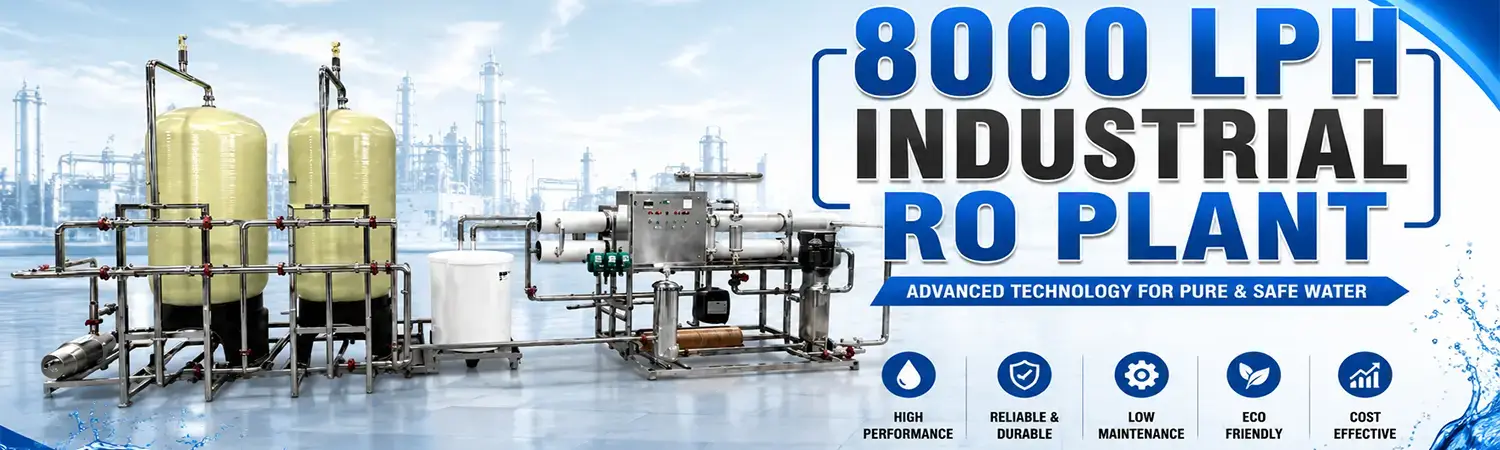
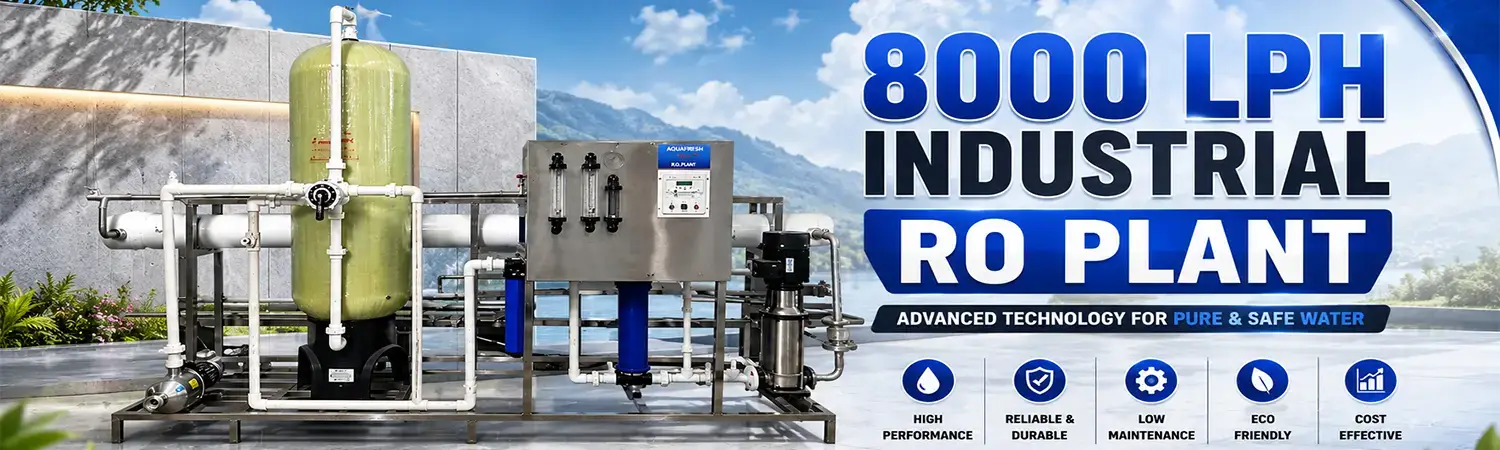
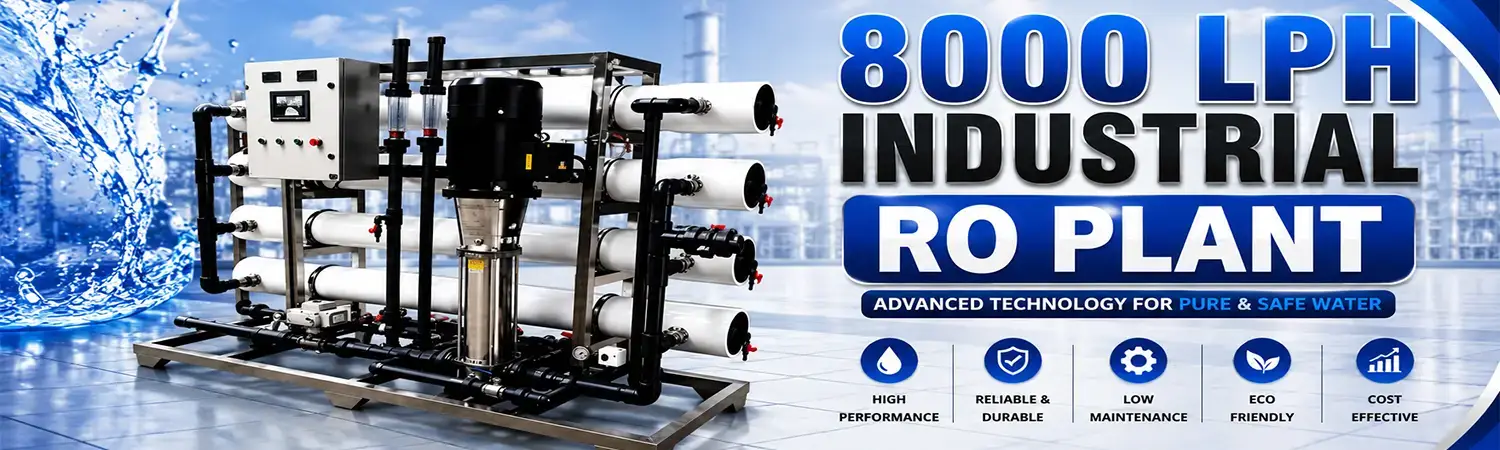
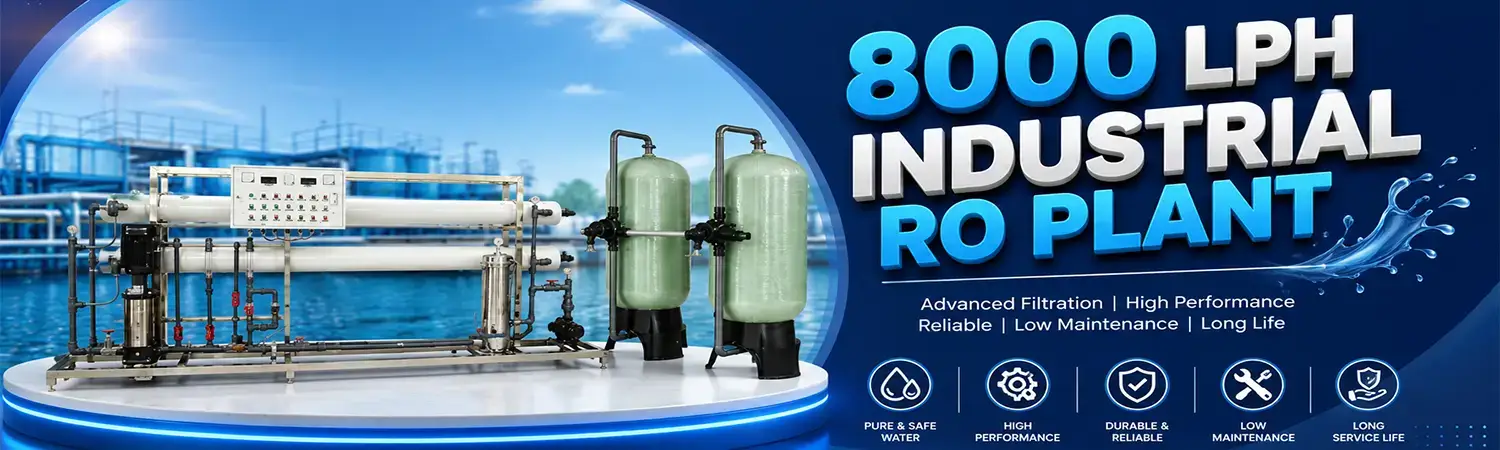
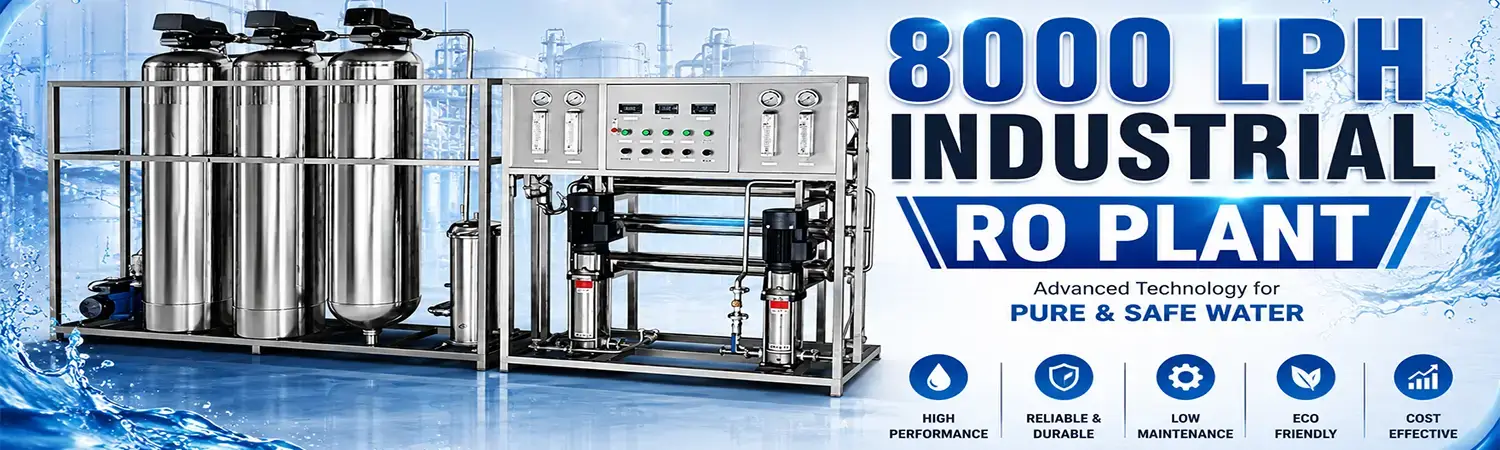
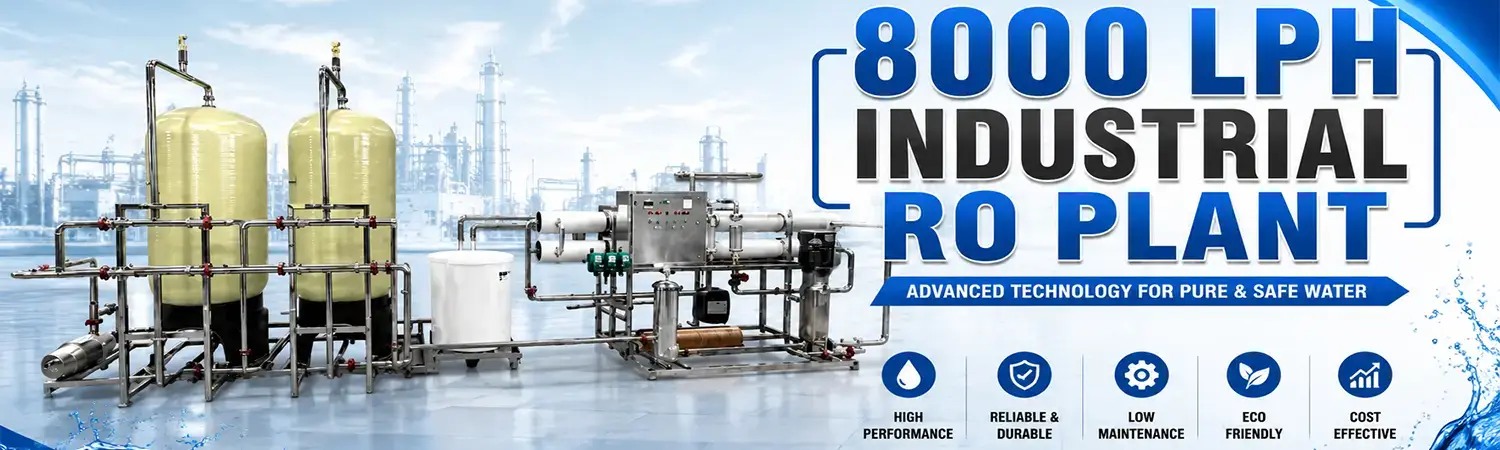
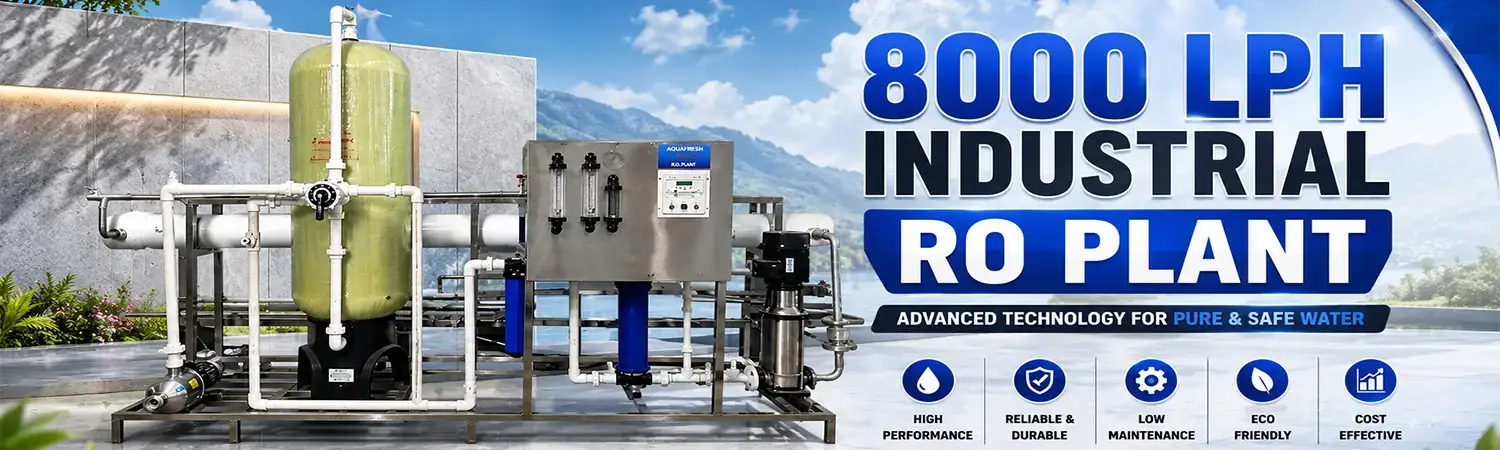
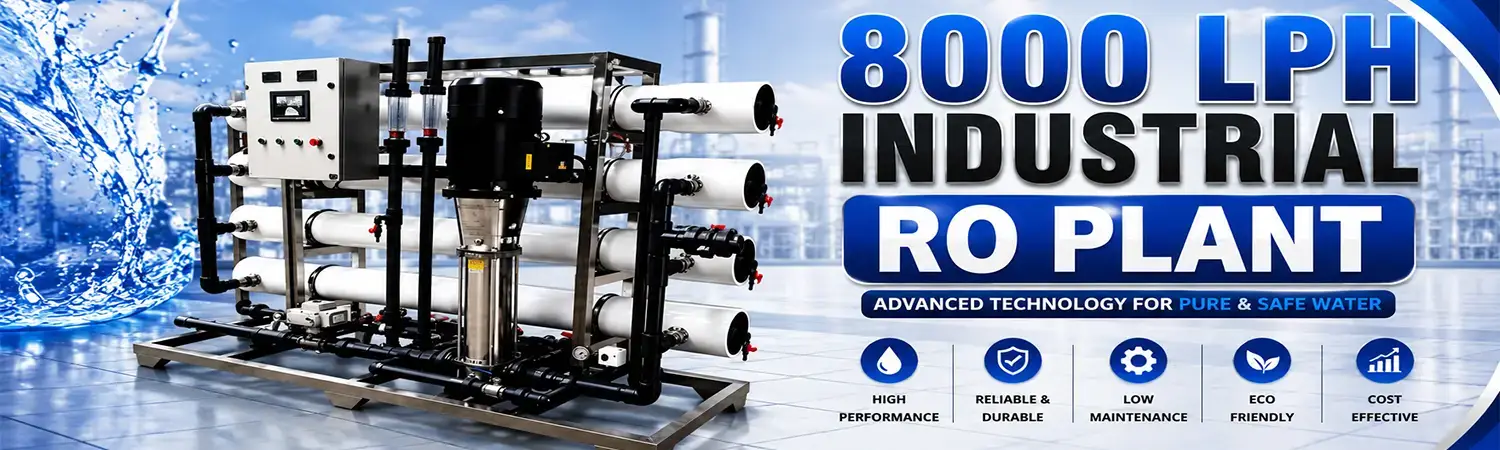
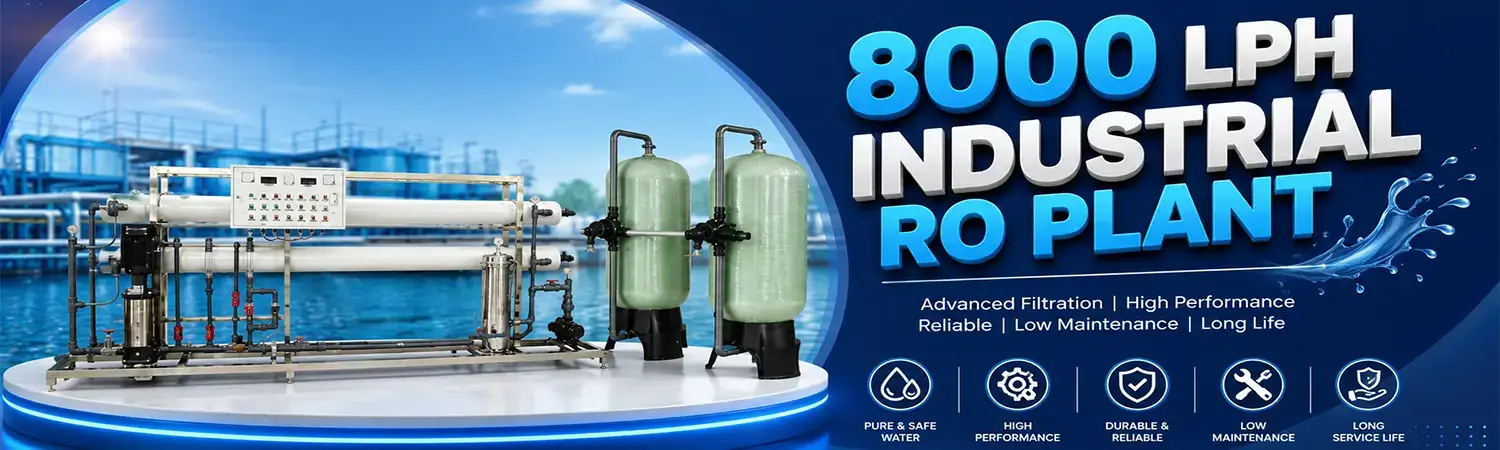
8000 LPH Industrial RO Plant in Delhi
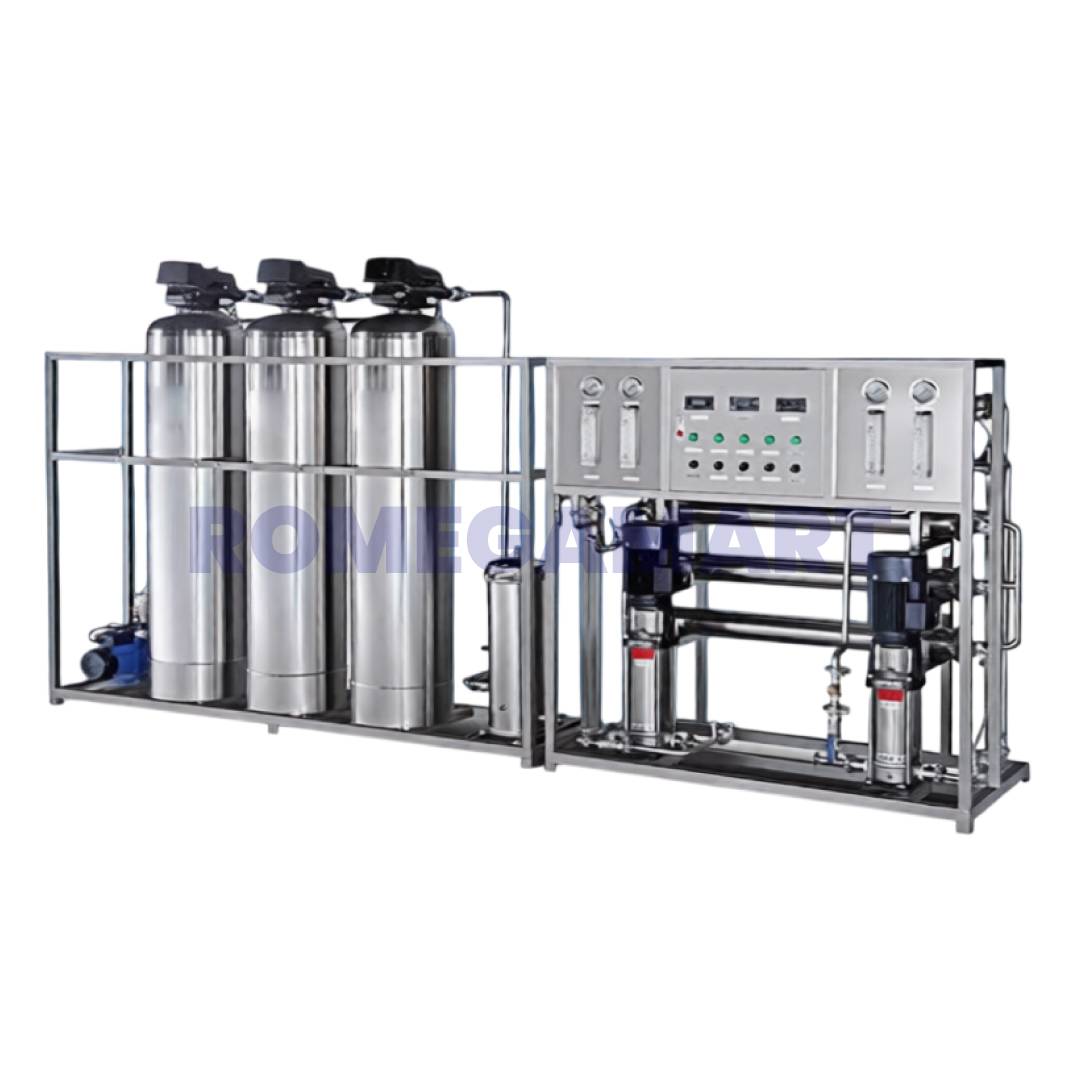
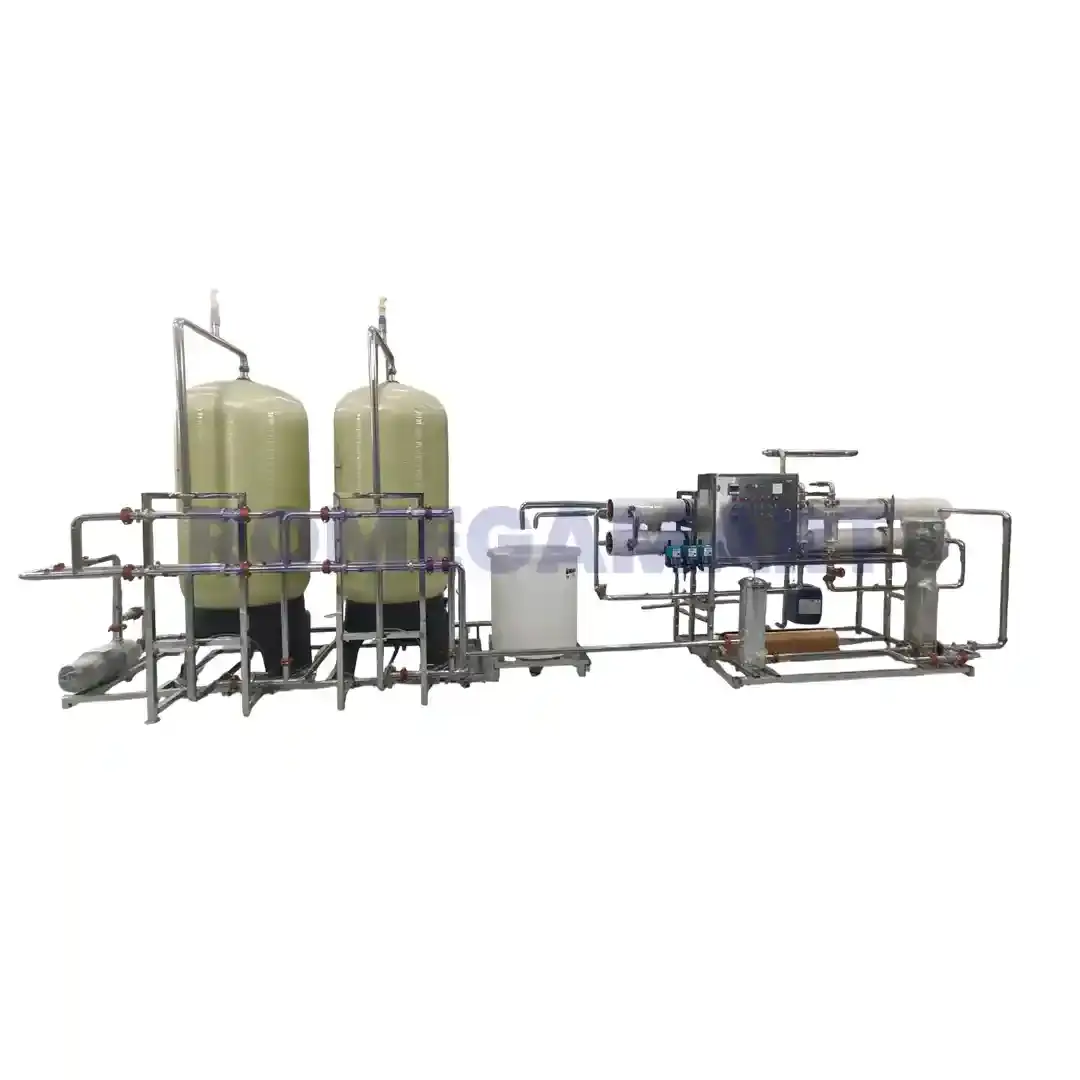


8000 LPH RO Plant – Features, Specifications, Pricing & Benefits
An 8000 LPH RO plant is a high-capacity industrial water purification system designed to produce 8000 liters of purified water per hour. This system is widely used in industries, commercial facilities, and institutional setups where continuous access to clean, safe water is essential. With its advanced filtration technology and durable construction, the 8000 LPH RO plant offers reliable performance, operational efficiency, and long-term cost savings.
Introduction
Reverse osmosis is one of the most trusted purification technologies for treating high-TDS and contaminated water at an industrial scale. An 8000 LPH RO plant uses a combination of pre-filtration, high-pressure pumping, and RO membranes to eliminate dissolved salts, chemical impurities, microorganisms, and heavy metals.
This capacity is ideal for large-scale operations such as manufacturing units, pharmaceutical industries, food and beverage production, hotels, hospitals, commercial buildings, and centralized water supply systems.
How an 8000 LPH RO Plant Works
The purification process begins with pre-treatment, where sediment, chlorine, and suspended particles are removed to protect the RO membranes. A high-pressure pump then pushes the pre-treated water through the RO membrane, where dissolved solids and contaminants are separated. The purified water is collected for use, while reject water is discharged or reused depending on the setup.
This multi-stage purification process ensures consistent water quality and meets industrial and commercial purity standards.
8000 LPH RO Plant Price – What Influences the Cost?
The 8000 LPH RO plant price depends on various technical and water quality factors. Since the plant serves high-capacity needs, its cost is influenced by membrane type, raw water TDS, pre-treatment requirements, automation features, and system construction.
Key factors affecting pricing include membrane quality, number of filtration stages, type of dosing systems, pump specifications, electrical components, and the material used for the skid or frame. Additional features such as TDS meters, flow indicators, PLC or microprocessor-based control panels, and stainless-steel construction can also impact overall pricing.
Despite the initial investment, industries find the 8000 LPH system cost-effective due to improved water efficiency, reduced downtime, and lower reliance on external water sources.
8000 LPH RO Plant Specification Overview
The 8000 LPH RO plant specification may vary based on manufacturer and application, but generally includes:
-
Multi-stage pre-filtration system
-
High-pressure pump suitable for RO operation
-
High-rejection RO membranes for effective TDS reduction
-
Automatic flushing system to increase membrane life
-
Control panel with monitoring features
-
Pressure gauges, flow meters, and safety devices
-
Strong MS or SS skid frame for durability
These specifications ensure the system delivers consistent output with high purification efficiency.
Applications of an 8000 LPH RO Plant
The 8000 LPH RO plant is suitable for industries requiring steady water output for processes like mixing, cooling, rinsing, steaming, and manufacturing. It is widely used in beverage production, pharmaceuticals, chemical processing, hospitality, hospitals, residential complexes, schools, and water bottling operations.
Its continuous high-capacity output supports operations that rely heavily on uninterrupted access to purified water.
Benefits of an 8000 LPH RO Plant
The plant offers several advantages, including high removal efficiency for TDS and contaminants, long operational life due to high-quality components, and stable water production throughout the day. Its design reduces maintenance requirements, enhances energy efficiency, and supports both industrial and commercial applications. The system also helps businesses reduce water procurement costs and improve overall water management.
Maintenance Requirements
For reliable, long-term performance, regular maintenance is essential. This includes periodic filter changes, membrane cleaning, checking pump performance, and monitoring chemical dosing. Proper servicing helps maintain high recovery rates, reduces scaling and fouling, and ensures consistent purity over time.
Conclusion
An 8000 LPH RO plant is an excellent solution for industries and commercial operations that require a large, consistent supply of purified water. While the 8000 LPH RO plant price varies based on system features and water conditions, the overall value, efficiency, and long-term reliability make it a worthwhile investment. Its robust specifications and dependable operation ensure that businesses can meet their water quality standards without interruption.
FAQs
1. How much water does an 8000 LPH RO plant produce in a day?
It can supply up to 192,000 liters of purified water in 24 hours.
2. What affects the 8000 LPH RO plant price?
Factors include membrane quality, raw water TDS, automation level, skid material, and pre-treatment requirements.
3. What are common uses of an 8000 LPH RO plant?
It is widely used in manufacturing units, hospitals, hotels, schools, food processing, and commercial complexes.
4. How often does the system require maintenance?
Routine maintenance is recommended every few months, depending on water quality and usage levels.
5. What does the 8000 LPH RO plant specification typically include?
It generally includes a multi-stage filtration system, high-pressure pump, RO membranes, automatic flushing, and a monitoring control panel.
Explore more - 9000 LPH SS RO, 10000 LPH SS RO, 50 LPH RO, 250 LPH SS.
More category - Water ATM, Water Softener, Water Treatment, Bottling Plant.