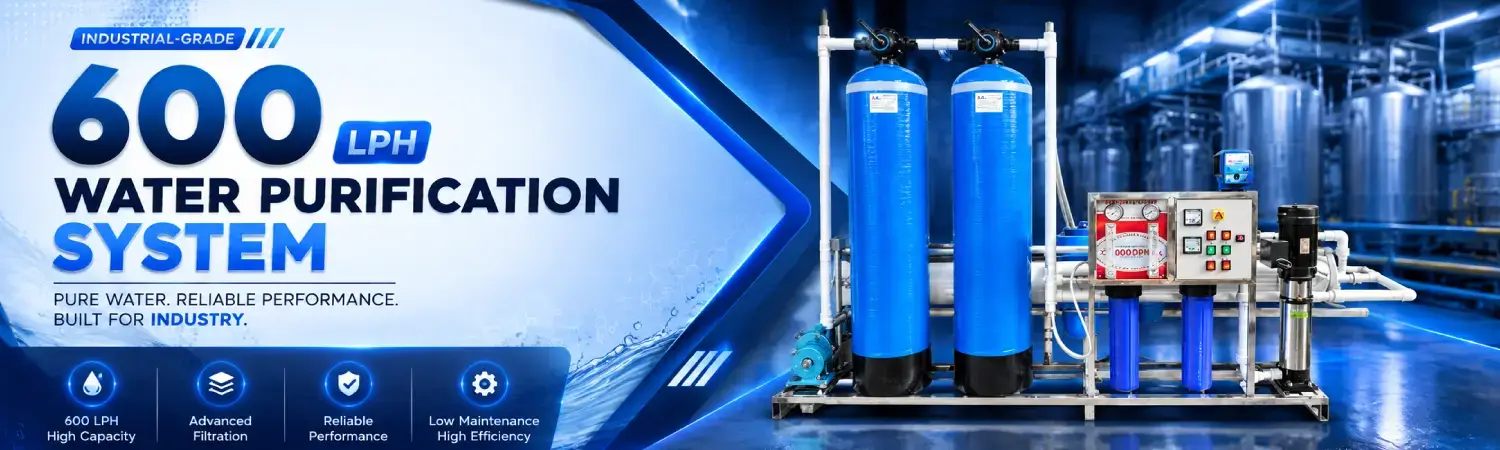
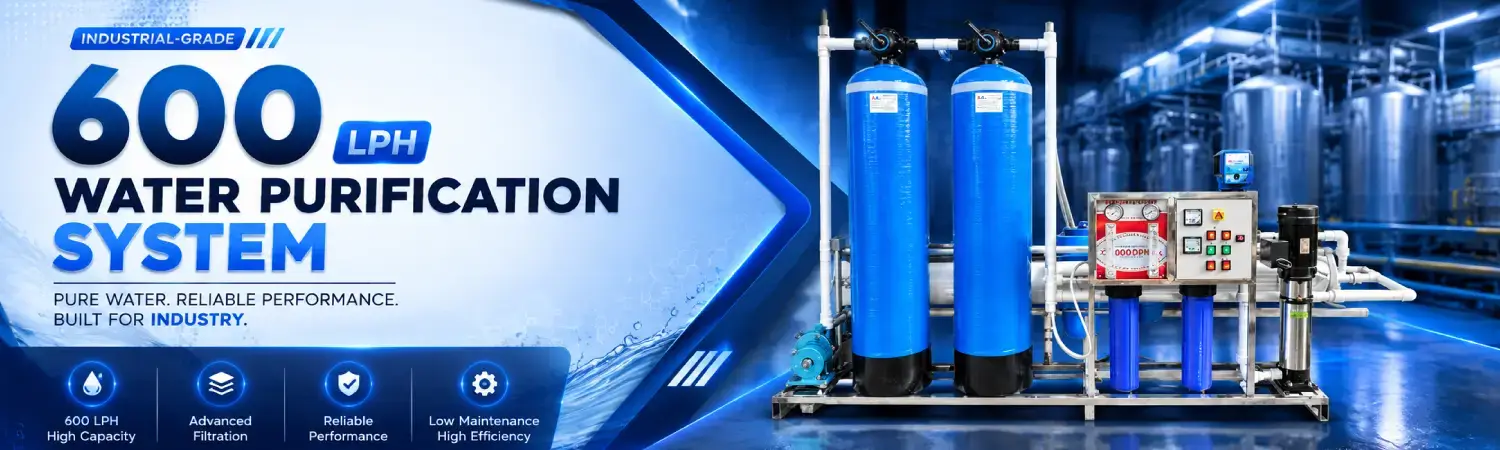
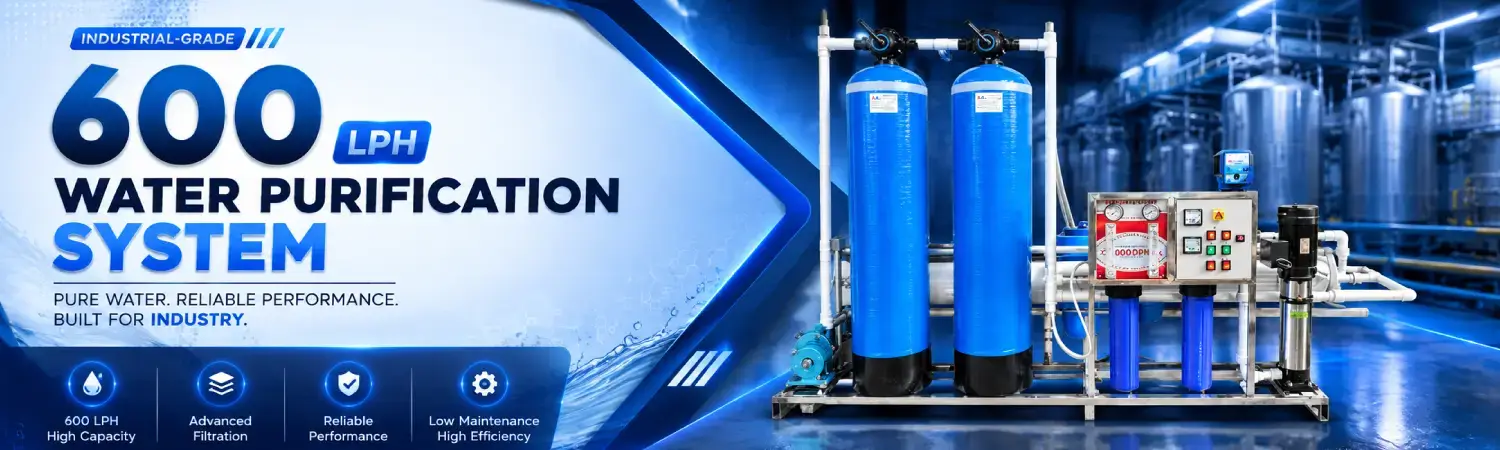
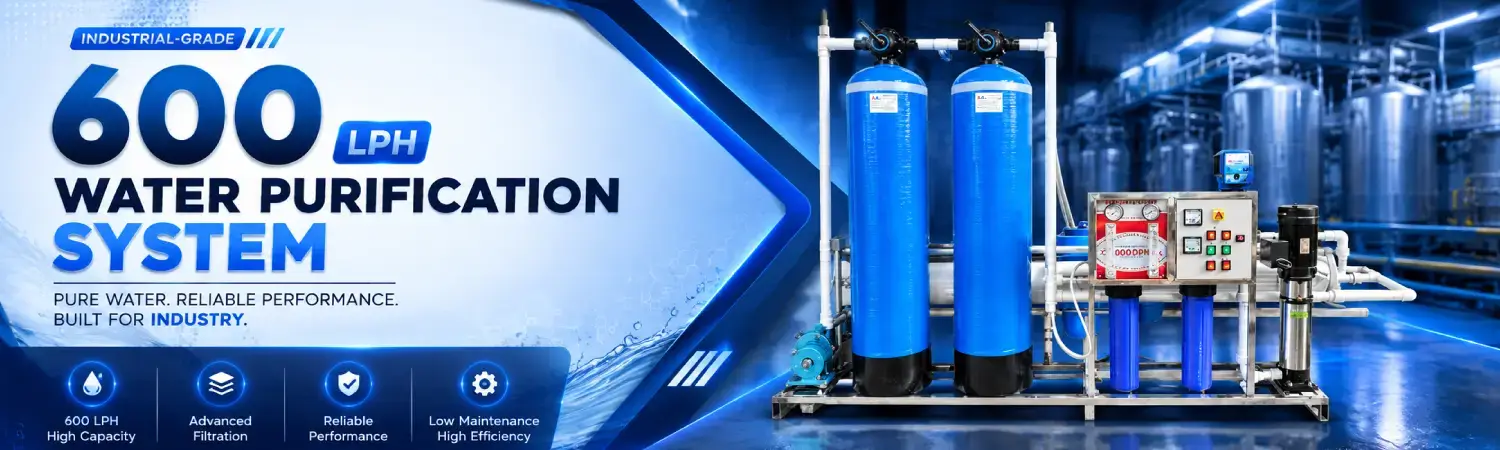
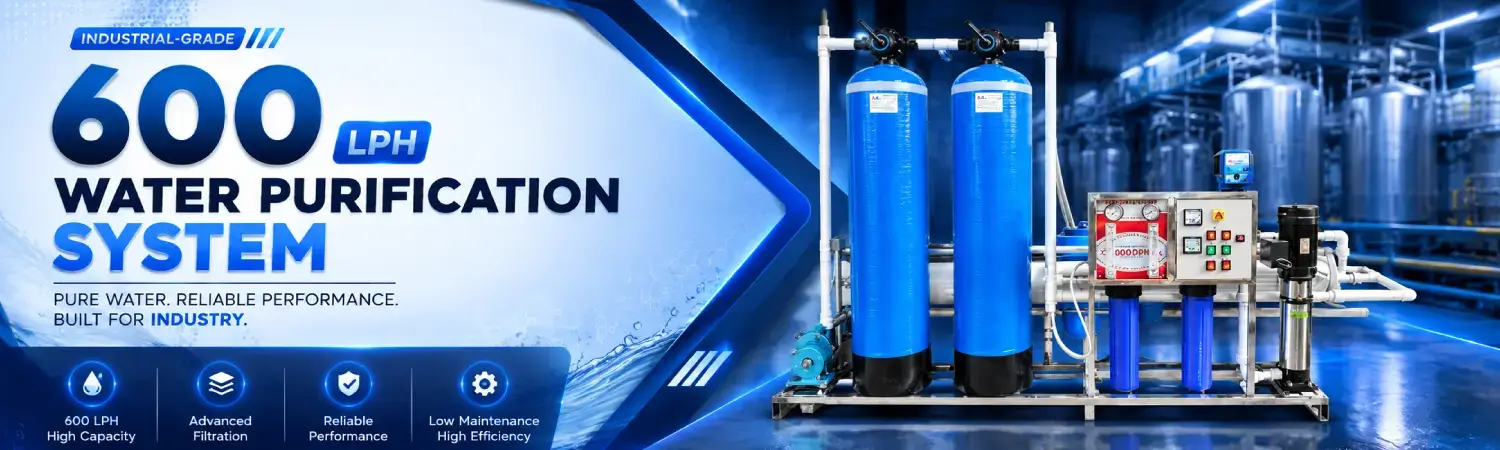
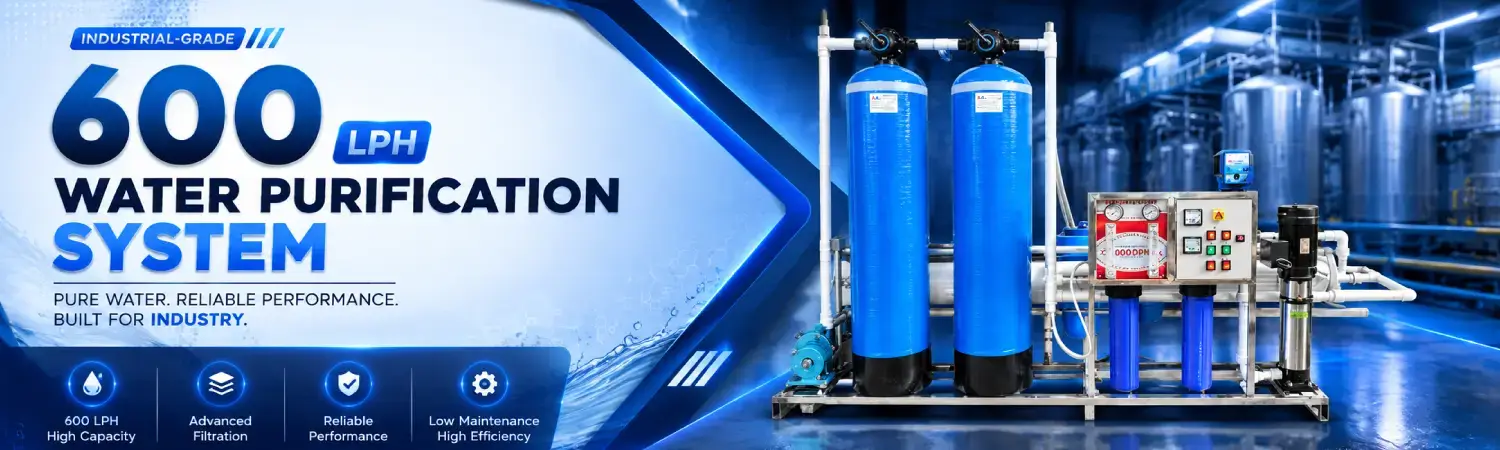
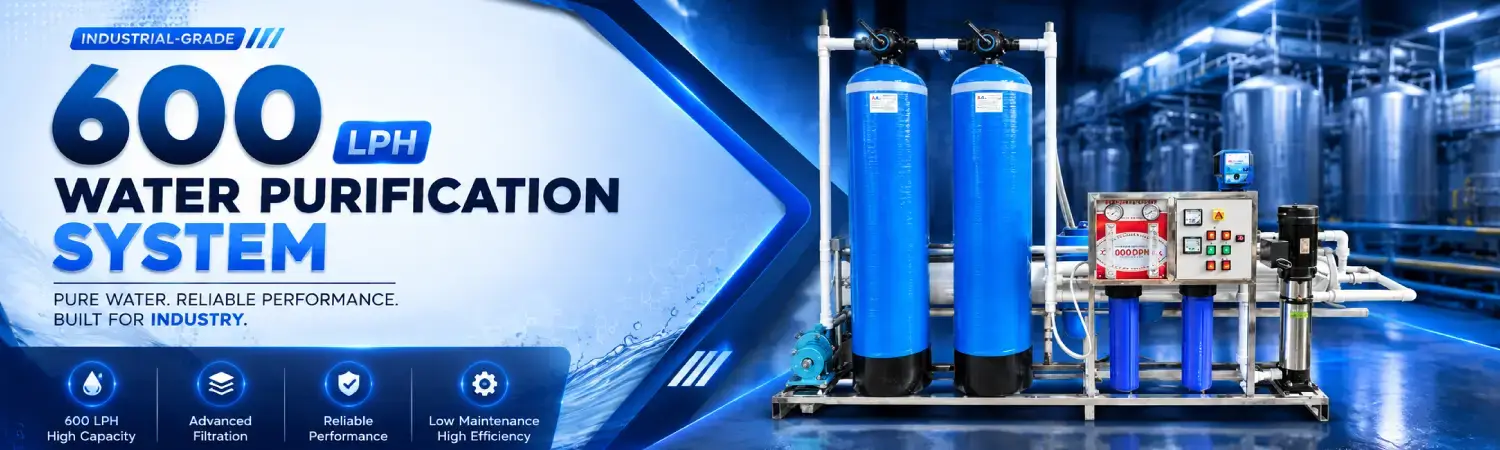
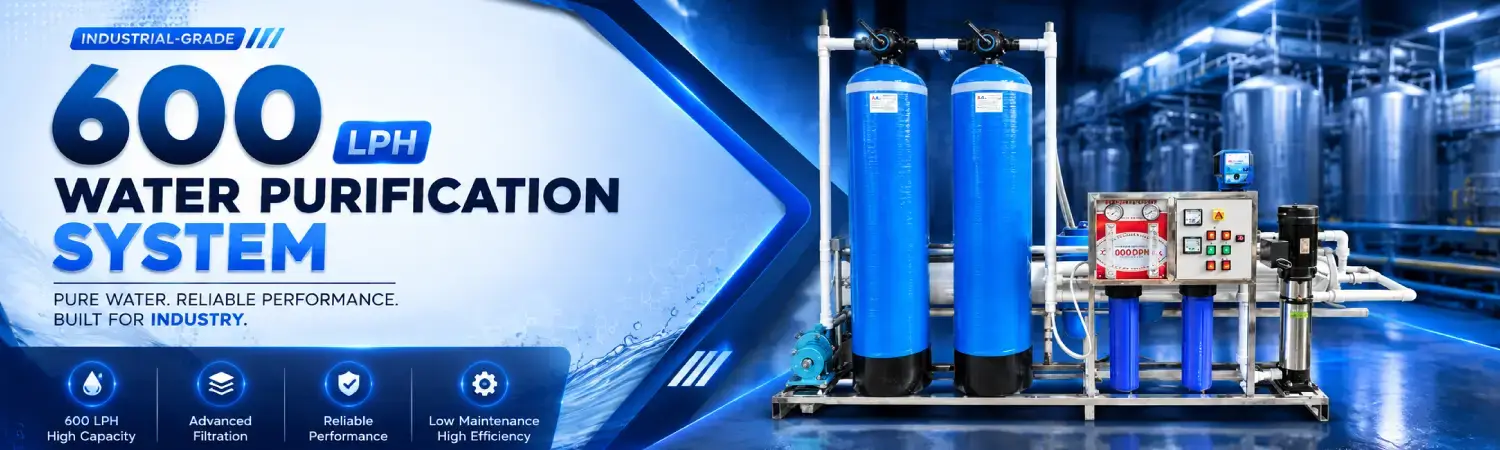
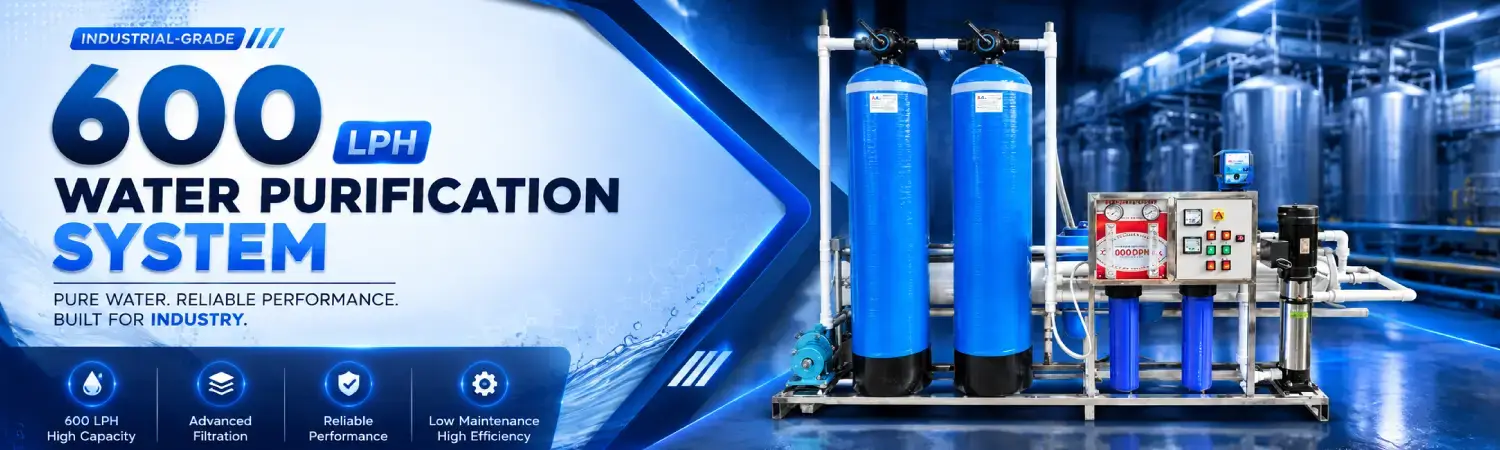
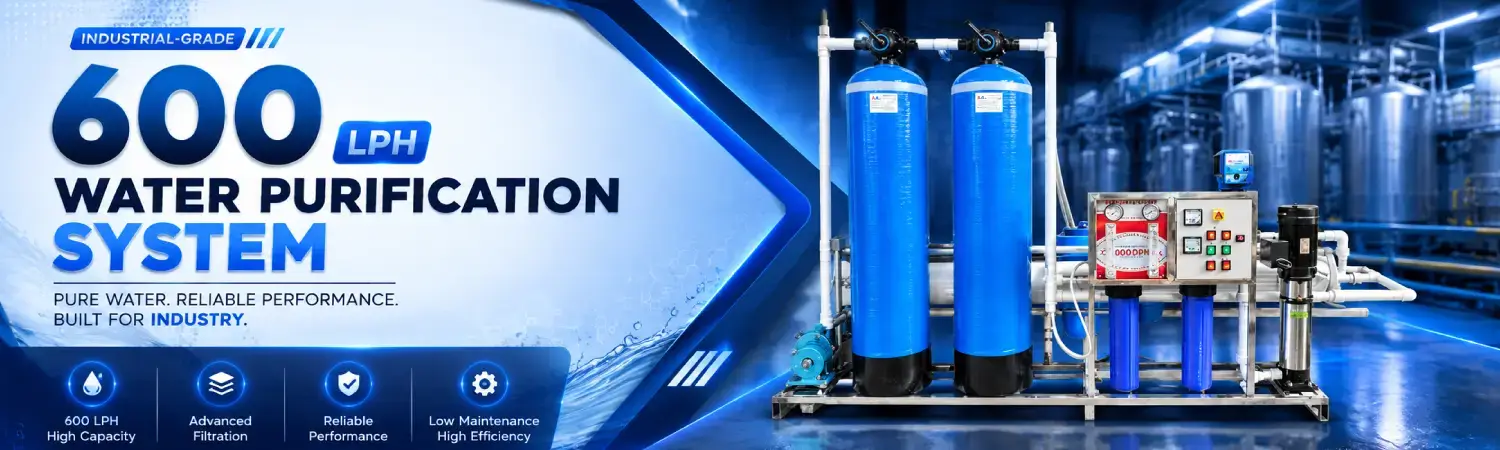
600 LPH Industrial RO Plant in Sikkim
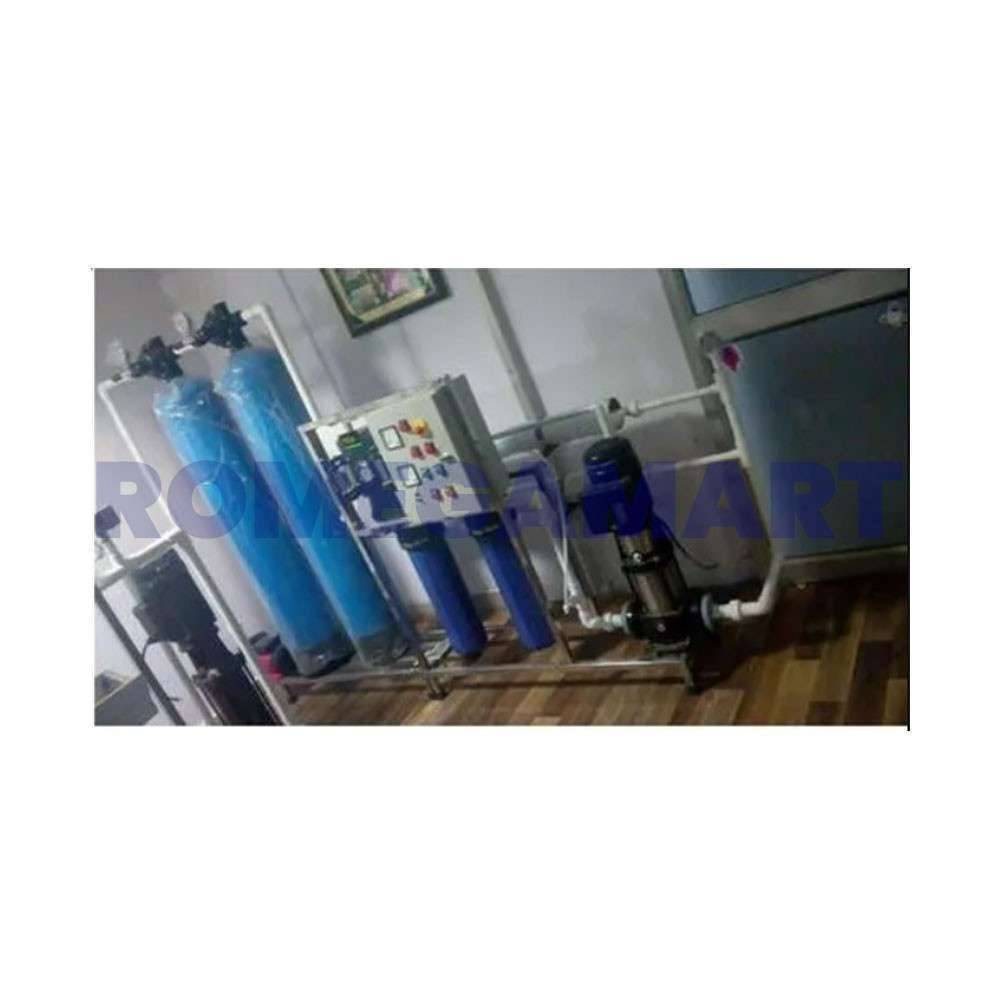
600 LPH RO Plant: Complete Guide to Industrial Reverse Osmosis Systems
Introduction
Water is one of the most essential resources, and maintaining its purity has become increasingly critical in industries and commercial establishments. Reverse osmosis (RO) technology has emerged as the gold standard in water purification, offering a reliable method to remove impurities, salts, and contaminants. Among the various RO systems available, the 600 LPH RO plant stands out for its ability to meet high-volume water demands efficiently.
In this blog, we will explore what a 600 LPH RO plant is, how it works, its features, benefits, and applications, helping you make an informed decision if you are considering installing one.
What is a 600 LPH RO Plant?
A 600 LPH RO plant refers to a reverse osmosis system capable of producing 600 liters of purified water per hour. The term “LPH” stands for liters per hour, indicating the system’s production capacity. This type of plant is widely used in industries, hospitals, hotels, restaurants, and large residential complexes where a constant supply of high-quality water is necessary.
The water produced is free from dissolved salts, harmful microorganisms, and other impurities, ensuring it is safe for consumption and industrial use. The appeal of a 600 LPH RO plant lies not just in its capacity but also in its adaptability. Whether it is supplying water for industrial boilers, laboratories, or hospitality purposes, it offers consistent quality and reliable performance.
How Does a 600 LPH RO Plant Work?
The 600 LPH RO plant operates on the principle of reverse osmosis, where water is forced through a semi-permeable membrane to remove impurities. The system begins with pre-filtration, in which sediment and carbon filters remove large particles, chlorine, and other contaminants that could damage the RO membrane.
After pre-filtration, water is pushed through a high-pressure pump that drives it through the RO membrane, separating purified water from rejected water containing dissolved salts and impurities. Some systems include post-treatment stages such as UV sterilization or mineral addition to improve water taste and quality. Finally, the purified water is collected in a storage tank and distributed to the required points. This multi-stage process ensures water meets the highest safety and quality standards.
Features of a 600 LPH RO Plant
A 600 LPH RO plant is designed for efficiency, durability, and ease of operation. Modern systems include automated control panels and sensors to monitor performance. The construction materials are typically corrosion-resistant, allowing the plant to operate reliably in industrial environments. Energy-efficient designs ensure minimum power consumption without compromising water quality.
These features make a 600 LPH RO plant more than just a purification system; it is a complete solution for industries and commercial establishments that need high-quality water on demand.
Benefits of Installing a 600 LPH RO Plant
Installing a 600 LPH RO plant guarantees a consistent supply of purified water, which is essential for commercial and industrial operations with high water demands. It removes impurities and harmful microorganisms, ensuring health and safety. Economically, it reduces reliance on bottled water, cutting costs and minimizing environmental waste.
The system is also versatile and suitable for multiple applications, including industrial processes, laboratories, hotels, restaurants, and large residential complexes. Its ability to handle high water volumes efficiently makes it a practical solution wherever clean water is needed.
Applications of 600 LPH RO Plant
The 600 LPH RO plant is used across various sectors. In manufacturing industries, it supplies purified water for boilers, cooling systems, and product formulations. Hospitals and laboratories depend on it for clean water that meets stringent hygiene standards. Hotels and restaurants use it to provide safe drinking water for guests, while large residential complexes benefit from a continuous supply of purified water. Its ability to handle high volumes efficiently makes it ideal for any scenario where smaller RO systems cannot meet the demand.
Maintenance and Longevity
Maintaining a 600 LPH RO plant is essential for long-term performance. Regular checks on filters, membrane cleaning, and monitoring water quality prevent operational issues. Inspection of pumps, valves, and other mechanical components ensures the plant functions optimally. Professional servicing when necessary can further extend the system’s lifespan. With proper maintenance, a 600 LPH RO plant can reliably operate for 8–10 years, delivering consistent water quality throughout its life.
Choosing the Right 600 LPH RO Plant
Selecting the right 600 LPH RO plant requires careful consideration of several factors. The quality of the source water, daily water demand, available installation space, and budget are all critical. Choosing a supplier with reliable after-sales support and warranty ensures the system operates smoothly. Making the right choice guarantees consistent water quality and reduces maintenance issues and operational costs over time.
Conclusion
A 600 LPH RO plant is an ideal solution for industries, commercial establishments, and large residential complexes that require a consistent supply of high-quality water. Its reverse osmosis technology ensures the removal of dissolved salts, impurities, and harmful microorganisms, making water safe for various uses. Understanding its features, benefits, and applications helps in making an informed investment that delivers long-term value.
With careful selection and proper maintenance, a 600 LPH RO plant can provide reliable water purification for years, ensuring both efficiency and peace of mind.
FAQs
1. What is the lifespan of a 600 LPH RO plant?
A 600 LPH RO plant typically lasts 8–10 years with regular maintenance and timely replacement of filters and membranes.
2. Can a 600 LPH RO plant be used for hard water?
Yes, but pre-treatment such as water softening may be necessary to prevent scaling and protect the RO membrane.
3. How much electricity does a 600 LPH RO plant consume?
Electricity consumption varies by system design, but it is generally around 2–3 kWh per 1000 liters of purified water.
4. Is the water from a 600 LPH RO plant safe to drink?
Yes, the system removes salts, bacteria, viruses, and other impurities, providing safe, high-quality water.
5. How often should the RO membrane be replaced in a 600 LPH RO plant?
The RO membrane should typically be replaced every 2–3 years, depending on water quality and usage, to maintain optimal performance.
Explore more - 9000 LPH SS RO, 10000 LPH SS RO, 50 LPH RO, 250 LPH SS.
More category - Water ATM, Water Softener, Water Treatment, Bottling Plant.